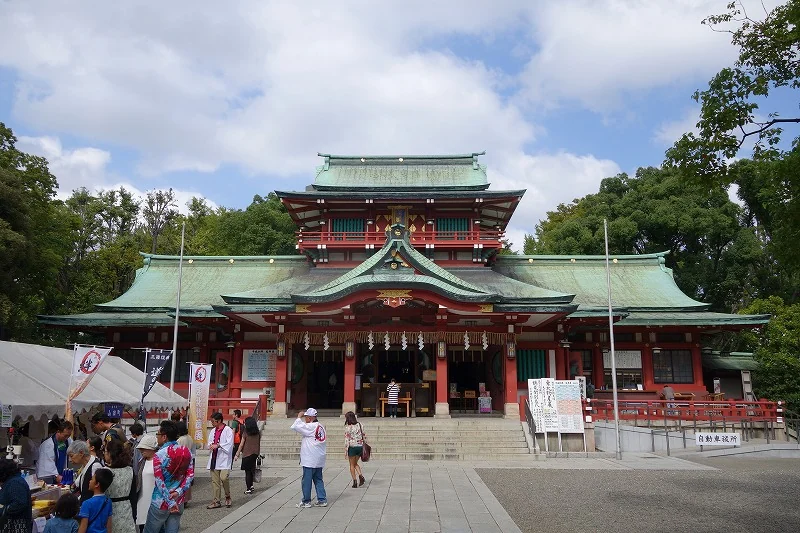
Official-source pilgrimage guide | full route not checked on site
Walk from Morishita through Kiyosumi, Hirano and Fukagawa to Tomioka Hachimangu. This seven-stop guide follows the Koto tourism association course and separates a sightseeing walk from a plan to receive every pilgrimage seal.
See the maps for visiting order, transport and regional groups.
Allow extra time for worship, reception and queues.
Check official notices for your visit year and day.
Explore the stops and directions
Approach from Morishita Station and finish towards Monzen-nakacho. The association’s guided tour meets at Morishita Station and ends at Fukagawa Tokyo Modern Museum. Our directions map covers the seven sacred sites, from Fukagawa Shinmeigu to Tomioka Hachimangu.
Visiting order and individual stops
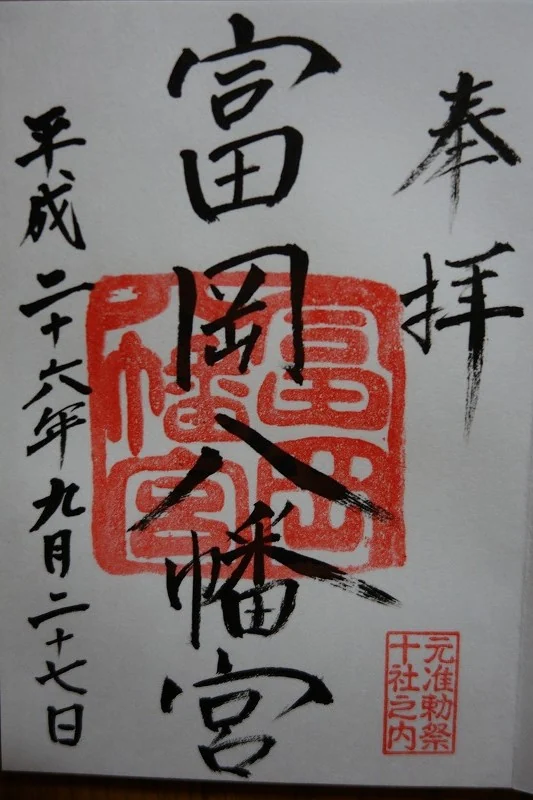
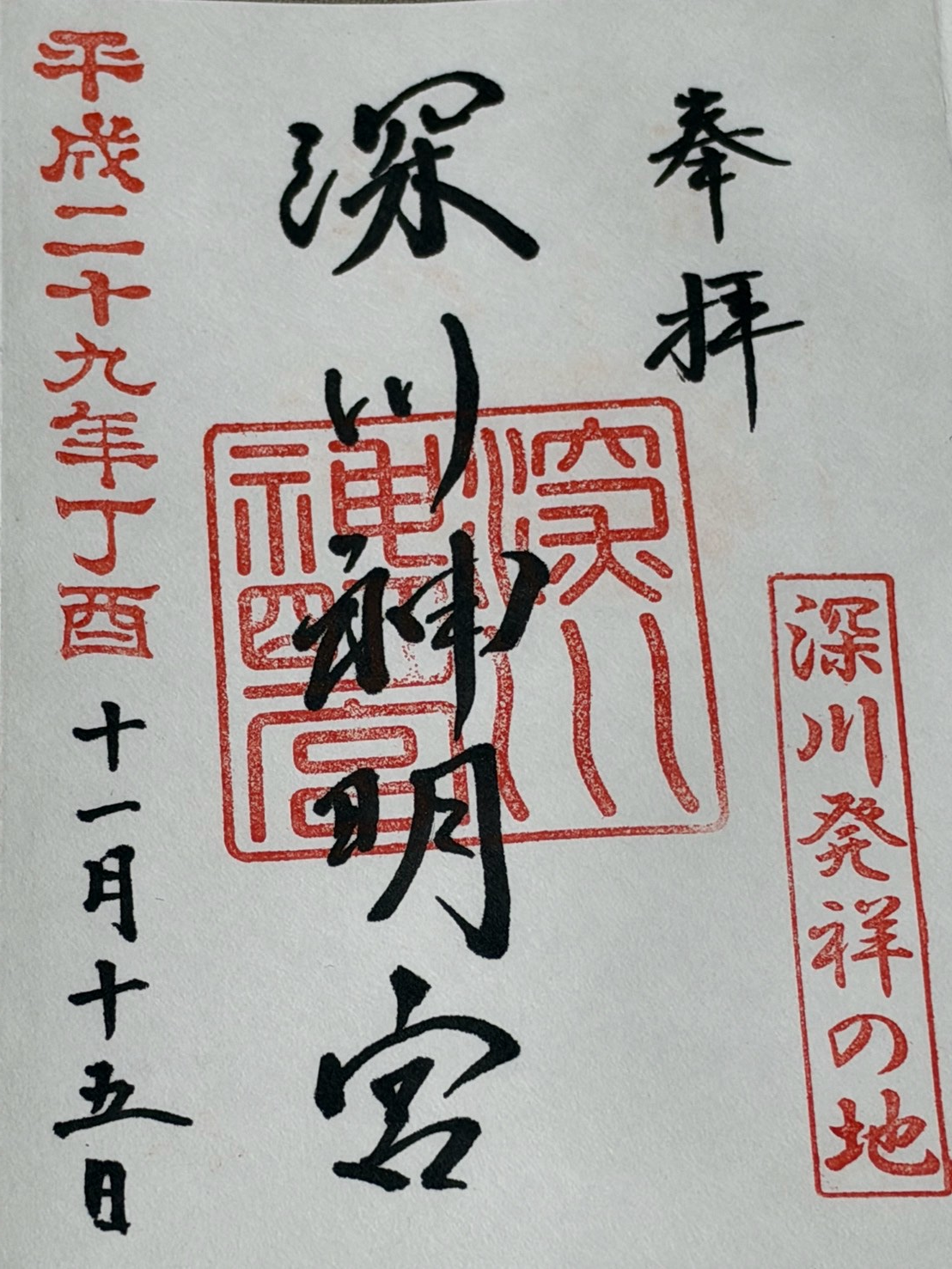
Photographs show historical goshuin from the named stops. They do not establish the seal offered for this pilgrimage or current availability. Inscription years and visit years are labelled separately; inscription dates are not photography dates. Select a photograph to enlarge it.
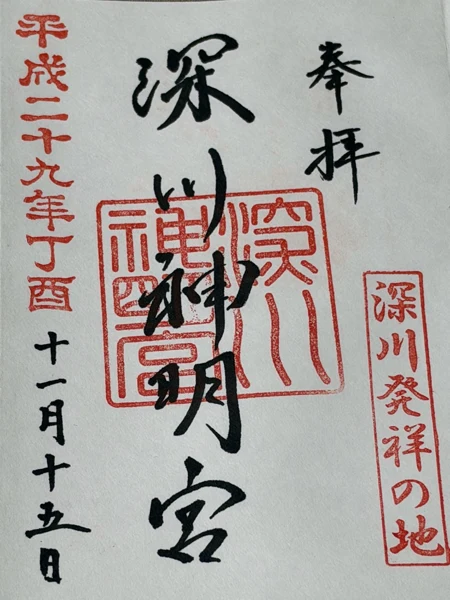
2017 inscription Fukagawa Shinmeigu Shrine (深川神明宮)
Location: 東京都江東区森下1-3-17
The pilgrimage’s Jurojin stop and the starting shrine in this model. Approach from Morishita Station, then continue to Fukagawa Inari Shrine in the tourism association’s order.
Check the site’s latest notice for ordinary goshuin and pilgrimage-seal reception on your visit date.
Fukagawa Inari Shrine (深川稲荷神社)
Location: 東京都江東区清澄2-12-12
The Hotei stop, also called Nishidai Inari. The official account describes an unstaffed shrine managed by the neighborhood association. Do not assume an ordinary-day resident goshuin office; check seasonal reception and issuing arrangements.
Check the site’s latest notice for ordinary goshuin and pilgrimage-seal reception on your visit date.
Ryukoin Temple (龍光院)
Location: 東京都江東区三好2-7-5
The Bishamonten temple near Kiyosumi-Shirakawa Station. It is a possible meeting point when splitting off the first two shrines. Opening of the deity’s hall and goshuin reception need not have identical arrangements.
Check the site’s latest notice for ordinary goshuin and pilgrimage-seal reception on your visit date.
Enjuin Temple (円珠院)
Location: 東京都江東区平野1-13-6
The Daikokuten stop in the Hirano area. Continue here from Ryukoin and check the address, rather than relying only on a similar temple name.
Check the site’s latest notice for ordinary goshuin and pilgrimage-seal reception on your visit date.
Shingyoji Temple (心行寺)
Location: 東京都江東区深川2-16-7
Fukurokuju is enshrined in a hexagonal hall. Distinguish access to the grounds from the special opening and pilgrimage-seal reception. The next stop is Fuyuki Bentendo.
Check the site’s latest notice for ordinary goshuin and pilgrimage-seal reception on your visit date.
Fuyuki Bentendo Hall (冬木弁天堂)
Location: 東京都江東区冬木22-31
A Benzaiten hall connected with the Fuyuki timber-merchant family. The official description notes the small present-day grounds. Keep groups from blocking the approach or reception area.
Check the site’s latest notice for ordinary goshuin and pilgrimage-seal reception on your visit date.
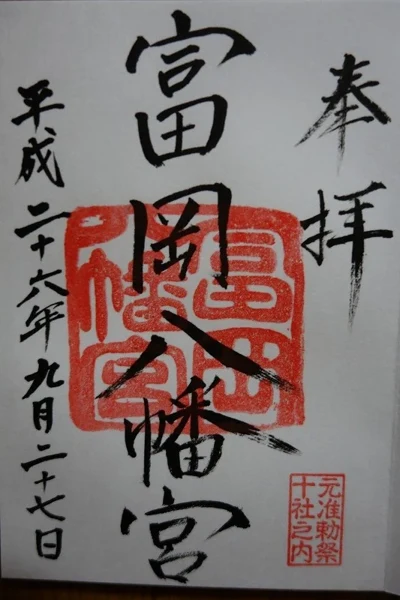
2014 visit Tomioka Hachimangu Shrine (富岡八幡宮)
Location: 東京都江東区富岡1-20-3
Ebisu is enshrined at Ebisugu on the western side of the precincts. Distinguish the main Hachimangu shrine from the pilgrimage’s worship point and reception. After visiting, return towards Monzen-nakacho Station.
Check the site’s latest notice for ordinary goshuin and pilgrimage-seal reception on your visit date.
Before setting out
The pilgrimage association normally lists January 1–7, 9 am–5 pm for the special opening. Its shikishi, lucky bamboo and bells belong to that seasonal arrangement. Ordinary goshuin-book reception is separate. The official site warns that some stops are unattended outside January 1–7; check changes for the year of your visit.
Distance, time and verification status
Official guided course: about 3 hours.
The full course has not been checked on site. Official model orders, official participant lists and provisional editorial orders are distinguished. Map travel estimates are not measured totals including worship, goshuin, queues, breaks or transport waits. Check entrances, path closures and unattended offices before departure.
Ordinary visits and pilgrimage reception
The pilgrimage association normally lists January 1–7, 9 am–5 pm for the special opening. Its shikishi, lucky bamboo and bells belong to that seasonal arrangement. Ordinary goshuin-book reception is separate. The official site warns that some stops are unattended outside January 1–7; check changes for the year of your visit.
Questions before your pilgrimage
Has the complete route been checked on foot?
No. It is a planning guide based on official sources and maps. Photographs are historical visit records or sourced reference photographs, not evidence of a new full-route field visit.
Do the time estimates include receiving every goshuin?
No total completing every reception is guaranteed. Distinguish sightseeing-course estimates from map travel times and allow separately for reception, queues and breaks.
What should I check before visiting?
The pilgrimage association normally lists January 1–7, 9 am–5 pm for the special opening. Its shikishi, lucky bamboo and bells belong to that seasonal arrangement. Ordinary goshuin-book reception is separate. The official site warns that some stops are unattended outside January 1–7; check changes for the year of your visit.
Sources checked
- Official source 1
- Official source 2
- Official source 3
- Official source 4
- Official source 5
- Official source 6
- Official source 7
- Official source 8
- Official source 9
- Official source 10
Official information checked on 13 November 2026. The full route has not been verified on site. Recheck reception, transport and path conditions before visiting.