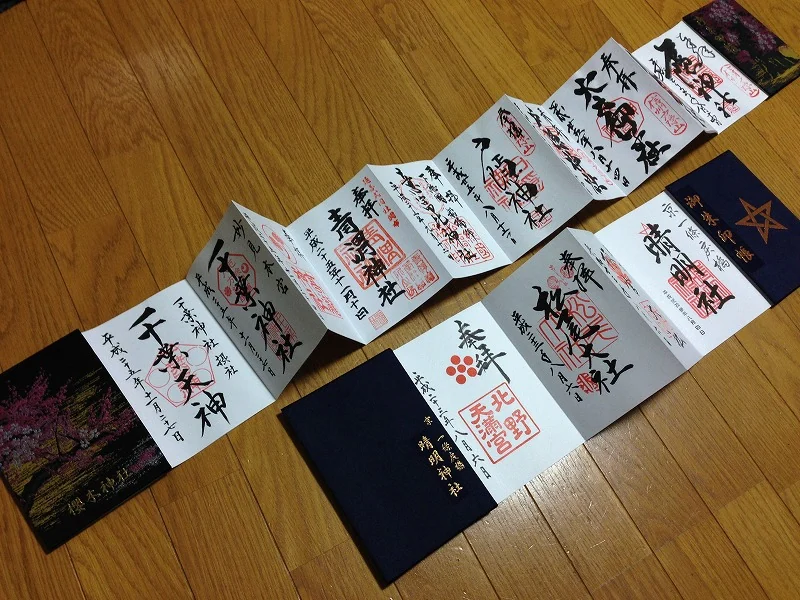
Open your goshuin book at the space you would like used and check that it is the right way up before handing it over. Where to begin and whether to use the reverse depend on the book and the place issuing the goshuin. This guide uses a right-opening accordion-style book as an example.
Identify the cover, title slip and writing paper
The cover is the firm outer part. A title slip is the narrow label attached to it; goshuin are written on the paper inside. Distinguish the white area against the cover from the folded writing paper.
Accordion books and conventionally bound books work differently. Read the supplied instructions or the manufacturer's guidance before starting. Do not peel apart the layers of folded paper as if they were separate pages in an ordinary book.
Page order: a right-opening accordion example
Sennencho's manufacturer guide illustrates beginning on the writing face immediately to the left of the inside cover in a right-opening accordion book. The diagram shows how the faces can follow in order. This is an example, rather than a rule covering every product or binding.
At the counter, open the blank face you want used and check the orientation instead of leaving the choice to someone receiving a closed book. If the goshuin occupies a spread or requires additional space, check the instructions first.
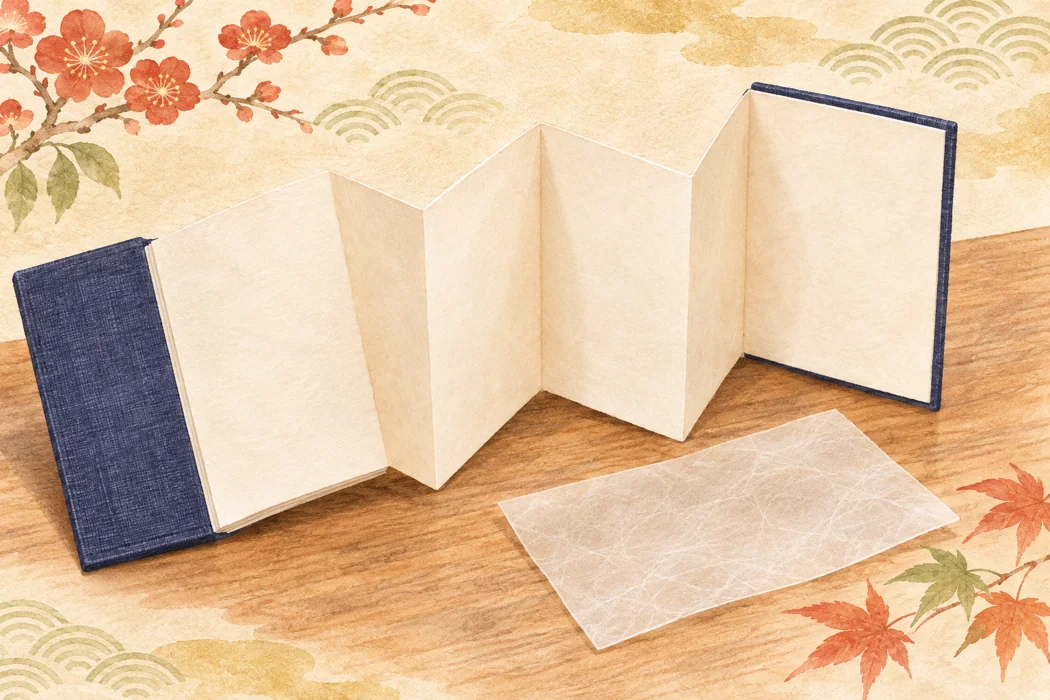
Choose a writing face and handle it with care.
Check the book's specifications and the issuing site's guidance on page order and reverse sides. Distinguish personal preferences from universal rules.
- Pages
- Check the face and orientation
- Reverse sides
- Check the paper and site guidance
- Wet ink
- Follow the collection instructions
Must you leave the first page blank for Ise Jingu?
Taniguchi Shoyudo's guide describes reserving the beginning for Ise Jingu as a personal choice. You do not need to treat starting at Ise Jingu or leaving the first writing face blank as a universal obligation.
If you want to leave a space, open the face to be used and explain before writing begins. Do not assume that a blank can later be filled with a changed date or inscription; ask the issuing shrine or temple about any individual request.
Can you use the reverse? Check the paper and the issuing location
Check the specifications of your particular book before using the reverse. Holly Hock's official FAQ explains its books' paper construction and warns that a large amount of ink may soak through. Two layers do not guarantee that ink will never penetrate.
A face that looks unused may still show ink through the paper or have seepage. If uncertain, leave the reverse unused while checking with the manufacturer, or use another book. Even suitable paper does not guarantee that a shrine or temple will accept that face; follow its guidance.
Do not peel paper layers apart or force an extra sheet into a gap as a remedy for ink penetration. If using a backing sheet made for a particular product, follow that product's instructions.
Names, interleaving sheets and wet ink
A title slip may carry a label such as '御朱印帳' (goshuin book). Ask the seller if you are unsure where or how to add your name. Some shrines, including Kunozan Toshogu, ask visitors to write their names in books left at the counter. Names can help prevent mix-ups; this specific instruction should not be presented as a nationwide requirement.
Organize notes or separate sheets tucked into your book according to the location's instructions before leaving it. If a sheet was inserted to absorb ink, check when it should be removed. Supplied blotting paper and items you tucked in yourself should not automatically be treated the same or thrown away together.
Drying time varies with the paper and amount of ink. Follow the instructions given when collecting the book rather than assuming a fixed number of minutes is always sufficient. Avoid touching, rubbing or immediately pressing wet faces shut.
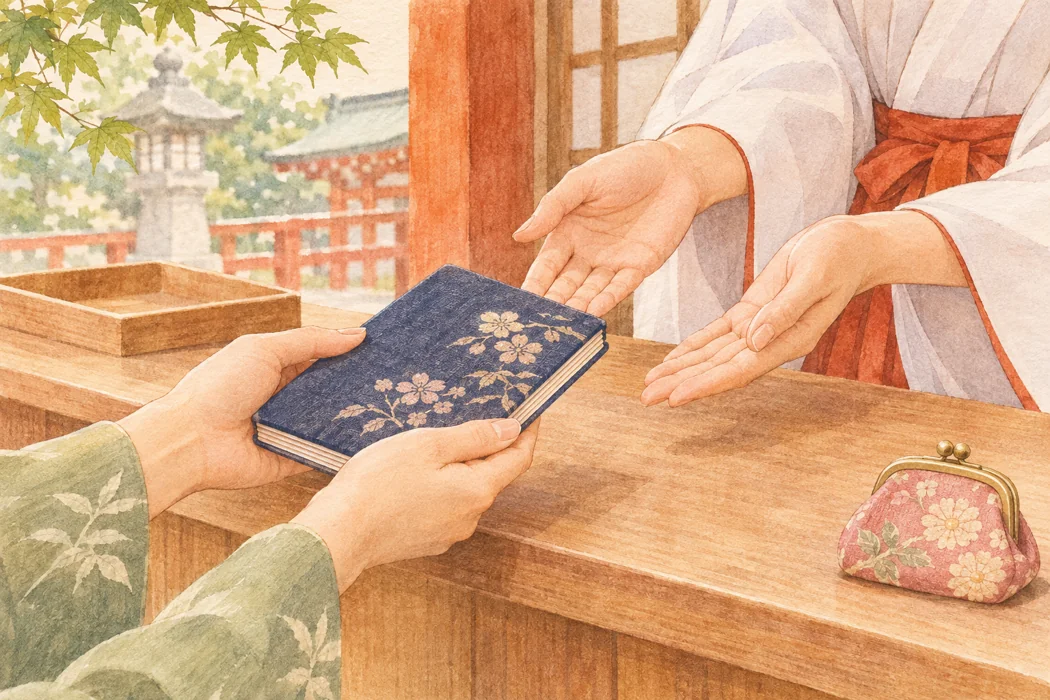
A final check before handing it over
- Open the intended face and check there is enough space.
- Ask about blanks and reverse sides in advance.
- Follow local guidance on names and loose items.
Three checks before handing over your book
Miyagi Prefecture's Association of Shinto Shrines advises opening the desired page, checking its orientation and explaining any spaces you want left blank in advance. Follow the counter's instructions and use these checks. Whether to leave the book before or after worship depends on the location, so follow the guidance there.
- Writing face and orientation
- Open the intended face and check that it is upright with enough free space.
- Blanks and reverse sides
- Ask about leaving a blank or using the reverse before any writing begins.
- Name and loose items
- Check the location's instructions about names and items tucked into the book.
Official sources checked
- Sennencho: How to use a goshuin book (Japanese)
- Taniguchi Shoyudo: Goshuin book questions, 25 July 2021 (Japanese)
- Holly Hock: Frequently asked questions (Japanese)
- Miyagi Prefecture's Association of Shinto Shrines: Goshuin etiquette (Japanese)
- Kunozan Toshogu: Goshuin (Japanese)
Prepared after checking official manufacturer and shrine guidance. Paper suitability and reception conditions depend on the product and location. The photograph is existing material and the diagram is illustrative; no new photography or physical comparison was carried out.