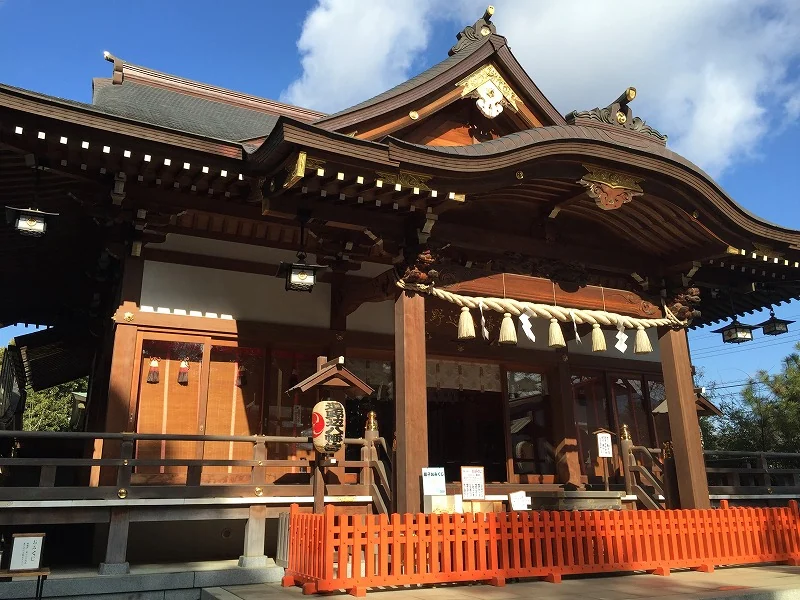
Goshuin etiquette begins with consideration for the place of worship, the people assisting you and other visitors. Check the shrine or temple's official guidance before you go, then follow its signs and reception procedure. Knowing what to do in common situations can help you ask calmly and respectfully on your first visit.
The essentials of goshuin etiquette
- Make time to worship
- Goshuin are connected with worship and the offering of copied sutras. Allow time to pay your respects, and follow any instructions about the order of worship and reception.
- Check the goshuin counter
- Confirm where, when and how goshuin are offered. The hours when you can enter the grounds are not necessarily the goshuin reception hours.
- Wait quietly
- Do not rush the person writing. Wait somewhere that does not obstruct a worship queue or passageway.
- Ask before taking photographs
- Observe no-photography signs. Do not photograph the writing process or the inside of the reception office without permission.
Check the arrangements specifically for goshuin
Before setting out, check the dates and hours, the counter location, whether goshuin are written directly in a book or supplied on a separate sheet, and any reservation requirements. If the only hours you find refer to prayer-service reception, do not assume they also apply to goshuin.
Aichi Jinjacho notes that a priest may not always be present and that ceremonies or other events can affect availability. Leave some flexibility in your plans rather than assuming goshuin are available whenever you arrive. This also helps you avoid making unreasonable requests.
The counter location differs between sites. For example, Senso-ji's official guidance directs visitors to Yogodo Hall for goshuin. Check the grounds map and signs so that you do not confuse the worship queue with the goshuin queue.
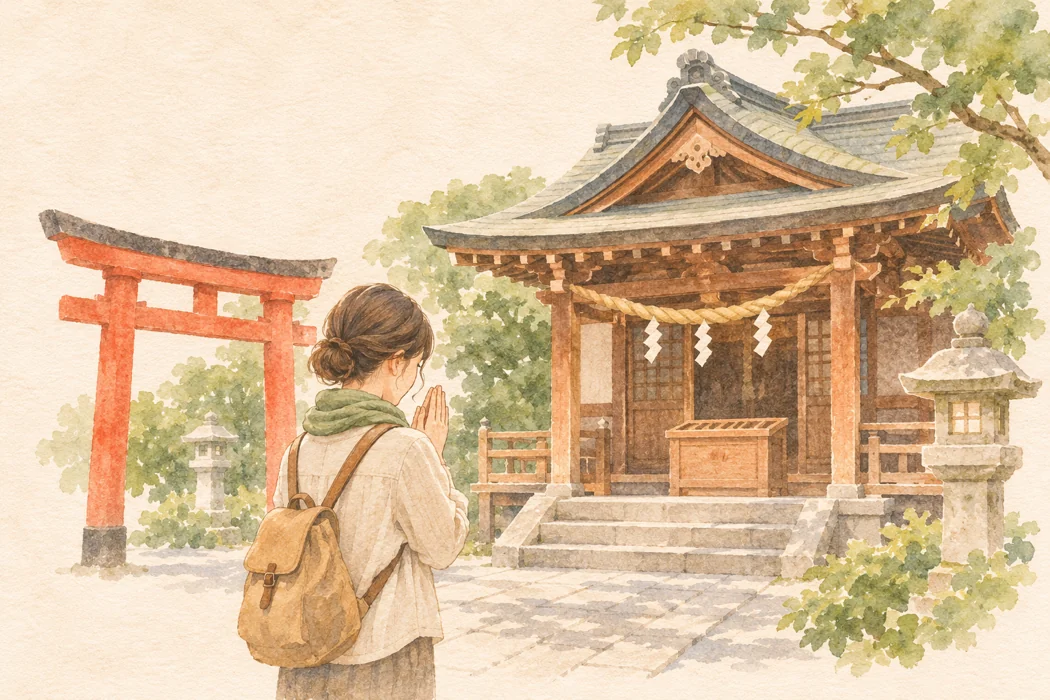
Make room for a considerate visit.
Goshuin etiquette starts with following the site's guidance and considering the people assisting you and those around you.
- Worship
- Distinguish shrine and temple customs
- Reception
- Ask briefly and politely
- Waiting
- Follow instructions without rushing
Distinguish shrine worship from temple worship
Two bows, two claps and one bow is the basic form at Shinto shrines. Jinja Honcho also explains that you should follow a shrine's own practice when it differs. The number of claps is not a universal rule for every shrine.
At Buddhist temples, the basic approach is to put your hands together and pray quietly. Do not assume you should clap as at a shrine; follow the temple's or Buddhist school's guidance. Moriyama City's visitor guidance also distinguishes shrine and temple practices.
As a general approach, worship before requesting a goshuin. If the site asks you to leave your book first, follow its procedure. Avoid planning a visit around increasing your collection while skipping worship.
Make a brief request and wait quietly
If a goshuin will be written directly in your book, have the intended page ready. If several designs are offered, decide which one you would like and explain your request briefly. Follow staff instructions about covers, interleaving sheets and collection tickets.
Miyagi Jinjacho asks visitors to help the writer concentrate, including by avoiding conversation or leaning over to watch. While waiting, do not speak loudly or ask the writer to hurry because you have somewhere else to be.
Follow the local guidance about the offering amount and when to pay. Preparing the amount you have confirmed in advance can make the exchange smoother. Amounts and payment methods are not the same everywhere.
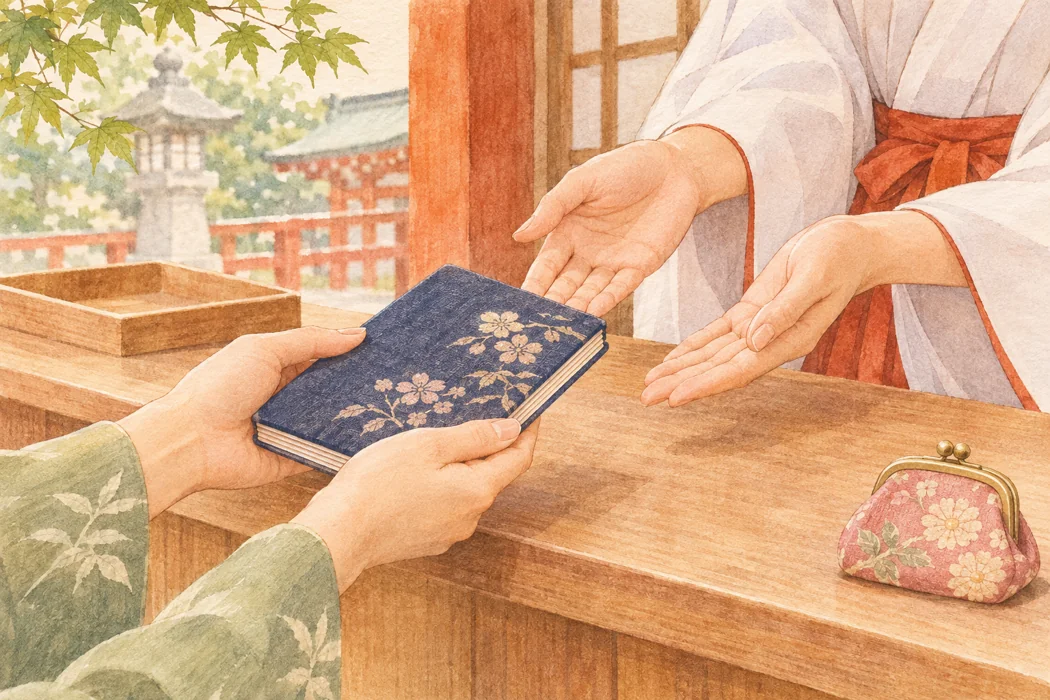
Take a moment at the counter
- Follow local instructions on when to leave your book.
- Wait quietly while it is being prepared.
- Check where and what you may photograph.
Check where and what you may photograph
Even where photography is allowed in the grounds, different rules may apply inside the main hall, during ceremonies or inside the reception office. Read the signs. If a rule is unclear, or you would like to photograph the writing process, ask beforehand.
Do not block a path or worship queue to take a picture, and avoid pointing your camera where other visitors' faces or books fill the frame. Permission to take a photograph and permission to publish it online are separate questions.
Distinguish an ordinary visit from formal worship
For an ordinary visit to the grounds, choose clean, modest clothing that shows respect for the shrine or temple. Consider the weather and walking distance so that you can move around comfortably.
A prayer service or formal worship inside a building may have different requirements. Check reservation guidance for clothing and footwear instructions. Do not turn a requirement for a particular form of worship into a rule that everyone requesting a goshuin must wear a suit.
Five common situations and what to do instead
| Situation | Avoid | What to do and why |
|---|---|---|
| You cannot identify the goshuin queue | Joining a line simply because people are standing there | Check the signs or grounds map for the correct counter. This avoids obstructing worshippers or another reception service. |
| The writing takes time | Rushing the writer or pointing a camera at their hands | Wait quietly and ask before taking photographs. Consider the writer and the other visitors. |
| Direct writing in books is unavailable | Continuing to demand direct writing after being offered a separate sheet | Respect the arrangements for that day. Do not direct your frustration about a different format at the staff. |
| No one is available, or reception has closed | Insisting on service outside the stated hours or demanding that someone return | Find out when and under what conditions you can try again. Not every shrine or temple has someone available at all times. |
| The handwriting differs from the sample | Demanding that it be rewritten to match the sample exactly | Accept the variation in handwriting. If an obvious date or other detail needs checking, ask calmly. |
Avoid turning individual experiences into universal rules
Is it disrespectful to use the same book at shrines and temples?
Book acceptance rules differ between sites and pilgrimages. If you are considering separate books, base your decision on guidance from the places you intend to visit. An experience at one site is not a rule for every shrine and temple.
Can I receive a goshuin on paper if I forget my book?
Some places offer a goshuin on a separate sheet, but this is not available everywhere. Ask what is offered, and do not insist if there is no such option.
What should I do after receiving it?
Thank the staff and check that you have the correct book or collection ticket. Follow any instructions about wet ink and interleaving paper. Protect separate sheets from creases and dirt on the way home. Move away from the counter so that the next visitor can be helped.
Sources and scope of verification
- Miyagi Jinjacho: goshuin etiquette: guidance on worship, waiting, photography and forgetting your book.
- Aichi Jinjacho: goshuin rules and etiquette: guidance on reception hours, a priest's absence and changes during events.
- Jinja Honcho: how to worship: basic shrine worship and following a shrine's individual practice.
- Moriyama City: basic etiquette for visiting shrines and temples: worship, clothing and consideration for others.
- Senso-ji: goshuin: a specific example of where to request a goshuin.
Check each site's latest guidance for its reception dates and hours, dress requirements and photography rules. The general considerations above do not determine every site's arrangements.
Official shrine, temple, Shinto association and municipal guidance was checked for worship, photography, waiting and clothing. The photograph is from an earlier visit. Check the site's latest official guidance before you travel.