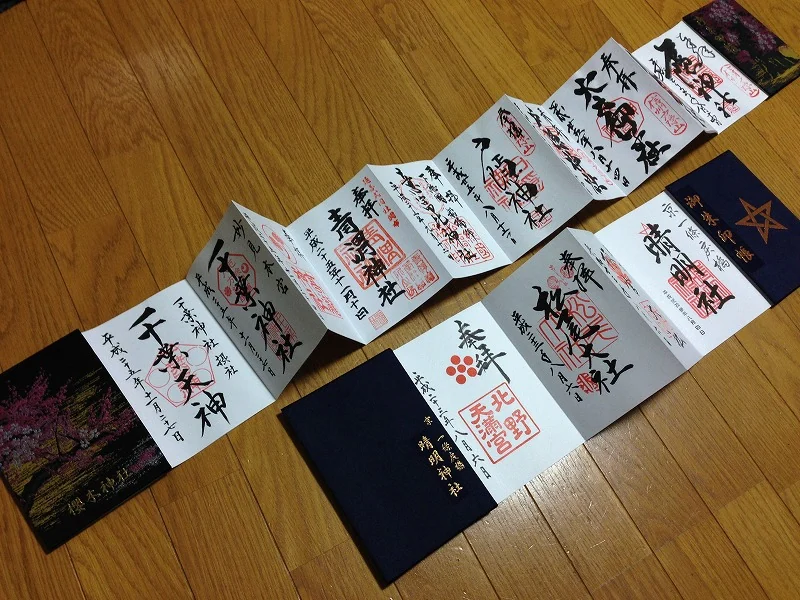
For your first goshuin book, compare the format you want to receive, actual dimensions, binding and paper, and portability. Do not rely on size labels alone. This guide uses published manufacturer specifications to explain what to check.
First decide between direct writing and separate-sheet storage
- For direct writing
- Look for a book intended for ink writing. Check the paper as well as the binding.
- For separate sheets
- Compare mounting sheets with storing them in pockets without adhesive, and check that the paper will fit.
- For a particular pilgrimage
- Check whether its organizer specifies a dedicated book or particular entry spaces before buying.
- Budget and carrying
- Consider the book, cover, pouch and storage supplies together.
Goshuin are connected with worship. Owning a book does not mean every shrine or temple will write in it in the same way. Choose a format suited to the arrangements at the places you want to visit.
Check actual dimensions rather than size labels
Size names vary between manufacturers and products. Holly Hock describes books 11 cm wide by 16 cm high and 12 cm wide by 18 cm high. Taniguchi Shoyudo's Yamato book labelled large lists 160 x 109 mm. The same size word does not necessarily mean the same dimensions.
| Published example | Dimensions | What to check |
|---|---|---|
| Holly Hock standard size | 11 cm wide x 16 cm high | Allow room in your bag for a cover. |
| Holly Hock large size | 12 cm wide x 18 cm high | Check thickness and weight as well as size. |
| Taniguchi Shoyudo Yamato, large | 160 x 109 mm, in the product page's order | Read the individual specifications rather than inferring them from the name. |
Cover dimensions, paper dimensions and the size of sheets a holder accepts are different measurements. Check which one a product page describes, and ask the seller if needed. The table illustrates specifications and is not a popularity or recommendation ranking.
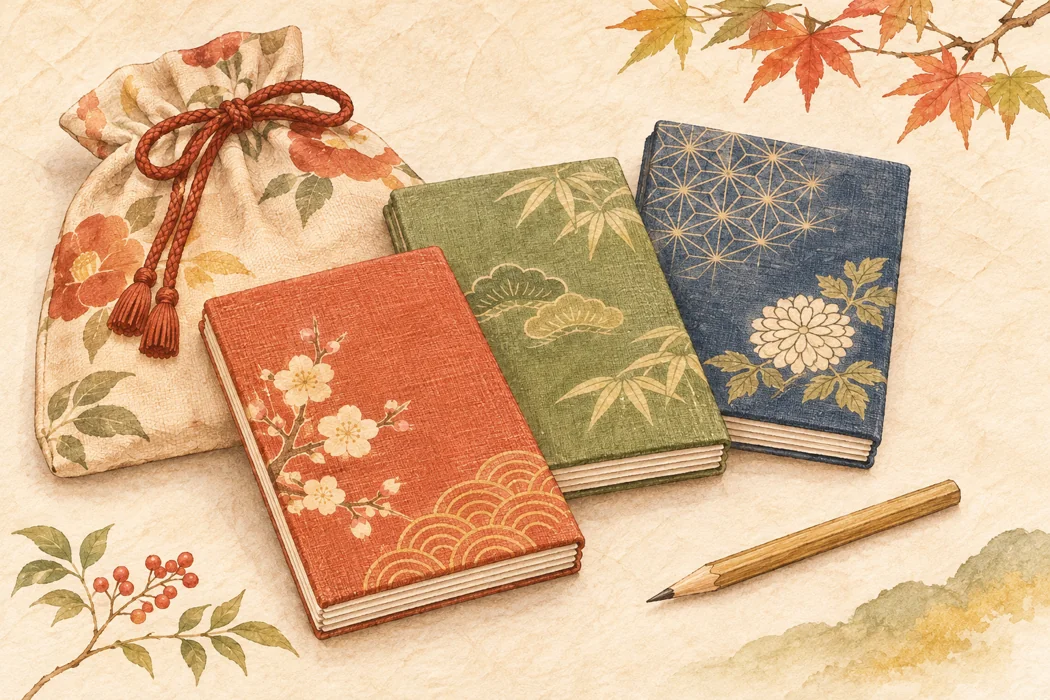
Choose a book for the way you will use it.
Consider your preferred goshuin format and how you will carry the book, alongside the cover design you like.
- Dimensions
- Check actual measurements
- Binding and paper
- Direct writing or sheet storage
- Portability
- Consider weight and a cover
Compare accordion, Japanese binding and pockets
Binding describes how a book opens; storage describes how sheets are kept. Some products combine features, such as a Japanese-bound book with pockets.
| Format | Feature to consider | Before buying |
|---|---|---|
| Accordion-fold | Folded paper can be opened out for viewing. | Check paper, opening direction and how pages or sides are counted. |
| Japanese binding | A booklet held together with thread or cord. | Check how it opens, space near the binding and its stated use. |
| Pockets | Some products store separate-sheet goshuin without adhesive. | Check usable pocket dimensions, the opening and double-page compatibility. |
Shirube's manufacturing guide shows accordion, Japanese-bound and film-pocket examples. Accordion does not always mean direct writing only, and Japanese binding does not always mean separate-sheet storage.
Thicker paper is not a guarantee against bleed-through
Read the cautions as well as terms such as hosho paper, washi or resistant to bleed-through. Holly Hock's FAQ notes that a large amount of ink may still affect the reverse. A paper name or thickness alone cannot guarantee the result.
If you want to use both sides, check the manufacturer's guidance and the site's reception rules. A product described as double-sided does not guarantee that every shrine or temple will write on both sides. No comparative paper or ink test was conducted for this guide.
Distinguish outer dimensions from usable capacity
For pockets, check that the sheets you want to receive will fit. Double-page and cut-paper designs also require attention to the full sheet and any delicate parts.
For example, LIHIT LAB.'s A-373 lists outer dimensions of 241 x 8 x 189 mm and a separate maximum insert size of 180 x 230 mm. Its instructions say the backing sheets are not for direct ink writing and that some items may not fit even within the stated size. A larger cover does not guarantee that a particular sheet will fit.
Include your bag, cover and budget in the decision
Check the inside of your usual bag and its opening. A book that fits on its own may be awkward to remove once a cover or pouch is added. Think about rainy days and the other items you will carry.
A design you like and will want to care for is also worth considering. Check the combined cost of the book and necessary accessories. This is neither a hands-on review of the listed products nor a price ranking.
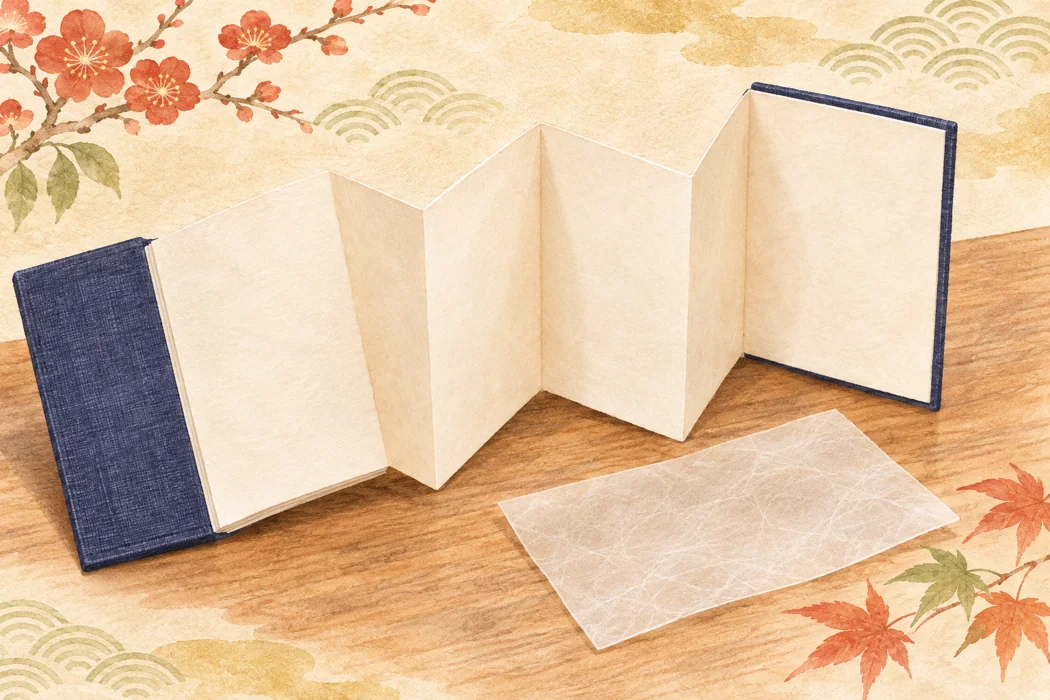
Look beyond the cover
- Compare accordion, Japanese-bound and pocket formats.
- Match separate-sheet dimensions to the storage area.
- Check the product instructions before using reverse sides.
Five checks before buying
- Is it for direct writing or for storing separate sheets?
- Do the dimensions refer to the cover, paper or usable pockets?
- What does the manufacturer say about binding, paper and usable sides?
- Will it fit your usual bag with its cover or pouch?
- Does it suit your intended sites or pilgrimage and your budget?
Questions about your first book
Is a large book always the safest choice for a beginner?
Bigger is not always better for your needs. Compare the intended format, actual dimensions and portability first. Size names also vary by manufacturer.
Should I start with separate shrine and temple books?
Acceptance rules vary between sites and pilgrimages. Check the places you want to visit rather than assuming one universal rule.
Can I always use the reverse of a double-sided book?
A product specification and a site's reception policy are separate matters. Check paper and ink guidance too, and follow the receiving site's instructions.
Sources and scope of verification
- Holly Hock official shop: FAQ:Size examples, paper and bleed-through cautions.
- Taniguchi Shoyudo: Yamato goshuin book, large:Dimensions, accordion construction and hosho paper.
- Shirube: manufacturing guide:Accordion, Japanese binding and pocket examples.
- LIHIT LAB.: A-373 separate-sheet goshuin holder:Outer dimensions, usable capacity and cautions including no direct writing.
- Jinja Honcho: about goshuin:The connection with worship.
Example specifications were checked on 9 November 2026. Stock, current selling prices and individual sites' acceptance rules are not guaranteed here. Check official guidance before buying or visiting.
Manufacturer and other official guidance was checked for dimensions, binding, paper and storage. The photograph is from an earlier publication, not a new measurement or hands-on comparison.