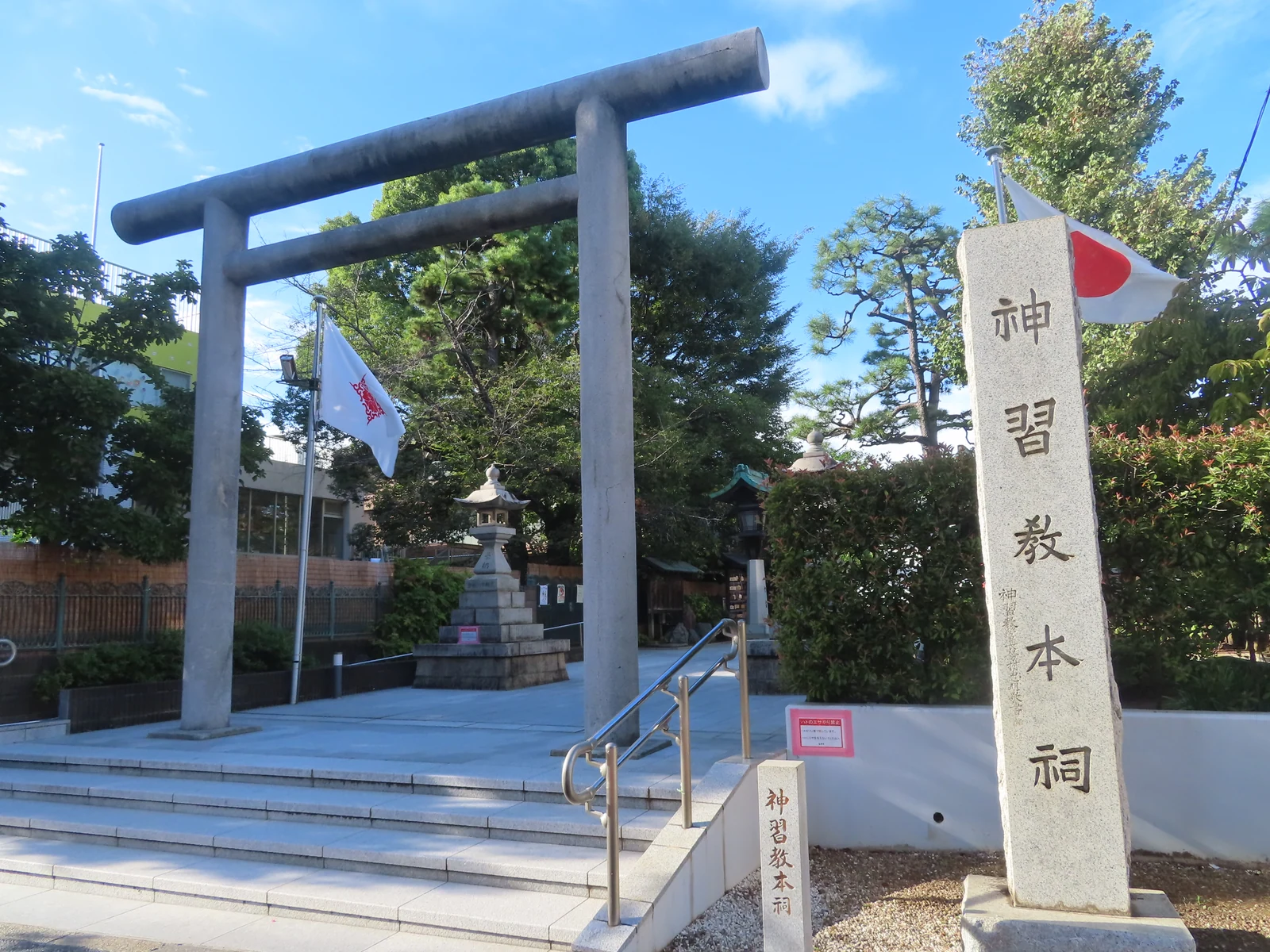
A short walk from Sakurashinmachi Station, Sakura Jingu is known for its cherry-blossom goshuin books. This account of an earlier visit now includes official information on monthly goshuin and practical points to check before setting out.
Receiving a goshuin at Sakura Jingu
Sakura Jingu offers monthly designs, but the issuing method depends on the goshuin. A direct inscription is written in the book you bring; a kakioki goshuin is prepared in advance on a separate sheet. Check the method for your chosen design before deciding what to bring and planning your visit.
- Goshuin hours
- For November 2026, goshuin are available at the shrine from 9:00 to 16:00. These are goshuin service hours, not the full hours during which the grounds can be visited.
- Where to ask
- The official monthly notice directs visitors to the amulet and goshuin counter. Follow the signs and instructions on site.
- Offerings for November 2026
- The handwritten “Sparrows and Maple Leaves” goshuin requires an offering of ¥500; the separate-sheet goshuin requires ¥600.
- Contact
- 03-3429-0869(Official telephone hours: 9:00–16:00)
Sources: Sakura Jingu's official November 2026 on-site goshuin notice and official directions; checked on 7 November 2026.
November 2026 designs and quantity limits
The following information applies to 1–30 November 2026. It does not mean that the same designs, offerings or conditions will apply in later months.
- Handwritten in your book: “Sparrows and Maple Leaves.” A maximum of 2 goshuin books per person.
- Pre-written on a separate sheet: 300 sheets per day, with a limit of 2 per person. Availability is not guaranteed throughout the period.
The official page uses different names for the separate-sheet design in its text and table. Check the official samples and latest notices to identify the design you want.
Cherry-blossom goshuin books
An official notice dated 16 April 2026 states that goshuin books are supplied together with a goshuin, rather than on their own. The options pair the book with a specified direct inscription or a separate-sheet goshuin. Check colours, stock and the accompanying design before visiting.
Source: Sakura Jingu's official goshuin-book notice, dated 16 April 2026; checked on 7 November 2026.
Postal requests if you cannot visit
Postal requests for November 2026 are accepted from 1–25 November, a shorter period than on-site distribution. Before applying, the shrine asks visitors to worship remotely by bowing towards the shrine, or to use its website's online remote-worship feature.
Check Sakura Jingu's official November 2026 postal goshuin notice for postage, application steps and deadlines. Follow that month's instructions rather than reusing older procedures or payment details.
Getting there and Google Maps
The shrine is at 3-21-3 Shinmachi, Setagaya-ku, Tokyo. The official directions give a 2-minute walk from the north exit of Sakurashinmachi Station on the Tokyu Den-en-toshi Line.
The photographs on the official directions page may help with turns from the station. Parking conditions could not be verified, so check with the shrine office before driving.
Open Sakura Jingu on Google Maps/Check route
An earlier visit (published in 2016)
The following section preserves the personal experience and historical introduction from the original article. It describes a visit made at that time, rather than a new visit or a check of present-day conditions. For goshuin arrangements and access, use the official information above.
A shrine in Setagaya offering cherry-blossom goshuin books.
Known as a centre of ancient Shinto practice, it is traditionally associated with healing and protection from fire.
Enshrined deities
Amaterasu Omikami
Ame-no-Minakanushi-no-Kami
Takamimusubi-no-Kami and Kamimusubi-no-Kami
Izanagi-no-Mikoto and Izanami-no-Mikoto
Kunitokotachi-no-Mikoto, Onamuchi-no-Mikoto and Sukunahikona-no-Mikoto
Shoichii Inari Okami
Sugawara Okami
Suitengu Okami
A further 21 deities are said to be enshrined here.
History and traditions
Founded in Kanda in Meiji 15 (1882), this relatively modern shrine enshrines Amaterasu Omikami and other deities from Japanese mythology.
The founder, Yoshimura Masamochi, is described as a 65th-generation descendant of the Onakatomi family, a lineage responsible for imperial court rites whose ancestral deity is Ame-no-Koyane-no-Mikoto. He prayed for Emperor Taisho's health and earned the trust of Meiji government figures and other followers. The shrine is revered as a principal centre of ancient Shinto practice.
Protection from fire and misfortune
According to the shrine's tradition, an oracle in Taisho 4 (1915) called for a move west. Its relocation to Setagaya in Taisho 8 (1919) spared it from the Great Kanto Earthquake and wartime destruction, contributing to its reputation for protection from fire and calamity.
Sacred object: a mirror with a sixteen-petalled chrysanthemum design
Before the Meiji Restoration, Keikoin received imperial permission to enshrine the mirror at Shinmeigu.
After the Restoration, it was transferred to Ise Jingu; Yoshimura Masamochi received a spiritually divided counterpart.
Notes from the visit
On my visit, I received a goshuin at the shrine office to the left when facing the main sanctuary.
The counter to the right of the sanctuary apparently also opens when busy, but it was closed during my visit.
The shrine office displayed many amulets with cherry-blossom designs, reflecting Sakura Jingu's name.
The shrine offered its own goshuin book at the time of the visit.
It was an attractive white book embroidered all over with pink cherry blossoms.
Sources and scope of verification
The official sources above were checked on 7 November 2026 for goshuin arrangements and access. Limited designs relate only to the periods stated. The personal account in the latter part of the article dates from its original publication and does not describe a new visit.
Goshuin and travel information has been checked against official and other cited sources, with unconfirmed points identified. Earlier photographs and personal experiences remain records of their original visits. Check the stated dates for limited designs.