
You do not need to start by automatically buying two goshuin books, one for shrines and one for temples. Check the places you plan to visit and follow any book requirements they publish. If you hope to receive a goshudai, separating shrines from temples may not be the only distinction that matters.
Choose one or two books around local requirements and your needs
One book reduces what you carry and keeps visits in chronological order. Separate shrine and temple books make the two sets of visits easier to browse. These are practical choices; they do not indicate different spiritual benefits.
In a 2021 article about using goshuin books, manufacturer Taniguchi Shoyudo (谷口松雄堂) describes separation as an individual choice rather than a universal rule. It also notes exceptions, including places that require a particular book. Distinguish this general explanation from the conditions at each issuing site.
Silence in an online guide does not guarantee that every book is accepted. Ask any place whose policy is unclear before deciding. You also need not assume that your first book must be completely filled before you can start a separate one.
Check your destinations before buying a second book.
Start with the inscription you want and the book requirements at the sites you plan to visit.
- Destination
- Read each site’s own guidance
- Inscription
- Distinguish goshuin, goshudai and pilgrimage materials
- Practicality
- Choose how to carry and organize your books
Check the book, the inscription and the arrangements for your visit
Look for the site's goshuin, goshudai or frequently asked questions page, together with its latest notices. Check whether your book is suitable, whether the inscription you want is available in it, and whether it is written directly or supplied on separate paper.
- Does the site accept a book that already contains goshuin from other places?
- Does it ask for separate shrine, temple or goshudai books?
- Is its own book or a particular pilgrimage book or sheet required?
- Is your chosen inscription written directly or handed over on paper? Check any closures or booking conditions for that day.
Opening hours for the grounds and goshuin reception hours are separate matters. Carrying two books does not guarantee direct writing on the day. Temple duties, events and the writer's availability can also affect arrangements.
A goshudai book is not simply a general temple book
A goshudai (御首題) records the daimoku, Namu Myōhō Renge Kyō. For a book dedicated to goshudai at Nichiren temples, a simple shrine-versus-temple split may be insufficient. Whether it contains goshuin from temples of other Buddhist schools can also matter.
Zenryu-ji Temple (善龍寺) explains that it gives goshuin in books containing entries from other shrines or temples, and goshudai in books dedicated to Nichiren temple goshudai. Myouzouji Temple (妙蔵寺), by contrast, states that its current chief priest writes the daimoku and related text regardless of whether the book is a dedicated goshudai book. We checked both published guides on November 19, 2026. These are individual temple policies and cannot be extended to all Nichiren temples.
Myoukouji Temple (妙光寺) also explains goshuin, goshudai and book separation in its July 2016 bulletin. That older explanation is background, not evidence of every temple's current reception policy. If you want a goshudai, ask the temple you plan to visit whether your existing book is suitable for that specific inscription.
Check pilgrimage books and sheets separately
A pilgrimage may use a nōkyōchō, arranged for its temples, or a designated sheet. Check the pilgrimage's own guidance about the book, paper and writing positions before preparing. Do not assume that every general temple book serves the same purpose.
For example, the Shikoku 88 Temple Pilgrimage Association describes repeat seals in a nōkyōchō separately from the association's prepared sheets. This does not mean a dedicated book is compulsory on every pilgrimage. Also distinguish goshuin or nōkyō from commemorative stamps used in a particular event.
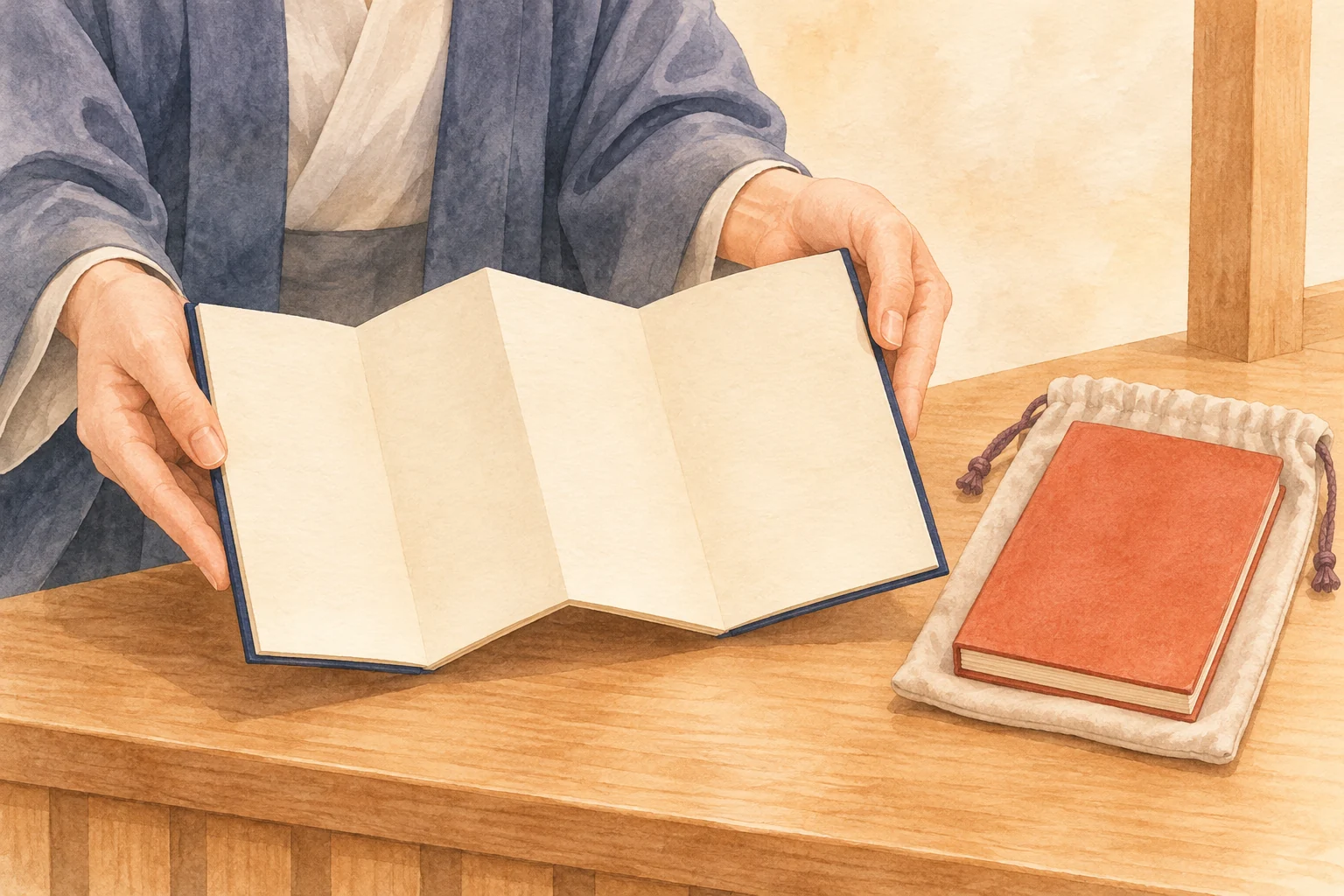
Explain what your book contains and what you hope to receive.
- Mention entries from other shrines or temples.
- Ask specifically about goshudai or a dedicated seal.
- Follow the arrangements available on the day.
A decision table, including books already in use
| Your plans and the site's guidance | How to prepare |
|---|---|
| Separate books or a particular book are required | Follow those conditions. Check whether simply carrying two books satisfies them. |
| You want a goshudai | Ask how the temple treats your desired inscription and entries from other schools or shrines. |
| You want pilgrimage nōkyō or a dedicated seal | Check the pilgrimage's official guidance for the book, sheet and type of inscription. |
| You have confirmed that one book is accepted | Choose one for convenience or separate books for organization. |
| The guidance does not answer your question | Explain which inscription you want and what your book contains, rather than assuming acceptance. |
If your book already contains both shrine and temple goshuin, we do not recommend cutting out or erasing pages because of this concern. Keep the book carefully. If a future visit requires a different one, prepare it for those visits.
At reception, explain that your book contains both shrine and temple goshuin and ask whether the particular goshuin can be written in it. Say explicitly if you want a goshudai. If your book is unsuitable, ask whether a separate sheet is offered or which book to bring next time, within the site's published arrangements. Respect the answer.
Primary sources and their limits
- Taniguchi Shoyudo (谷口松雄堂): using goshuin books, July 25, 2021 — general advice from a manufacturer.
- Zenryu-ji (善龍寺): which books receive goshuin or goshudai — this temple's published distinction.
- Myouzouji (妙蔵寺): visiting and receiving a goshudai — this temple's published book policy.
- Myoukouji (妙光寺): goshuin and goshudai, July 2016 bulletin — terminology and historical background, separate from current reception conditions.
- Shikoku 88 Temple Pilgrimage Association: books and prepared sheets — an example of pilgrimage materials.
We checked published temple, manufacturer and pilgrimage association guidance. Individual temple policies do not apply to every temple. Historical bulletins are distinguished from current published guidance; confirm reception and writer availability before visiting. No new field visit or photography was carried out.