Chiba Shrine in Chiba City's Chuo Ward is dedicated to Myoken. The official goshuin hours are 9:00–17:00, with an offering of ¥500. Direct inscriptions are suspended during certain periods, so check the schedule on the official goshuin page before visiting.
Goshuin/Visit confirmation items for Chiba Shrine
- Engraving of goshuin
- The official offering is ¥500 and hours are 9:00–17:00. Goshuin are not issued outside those hours, and direct inscriptions may be suspended during specified periods.
- Goshuin Books
- The official website lists one blank goshuin book at ¥1,500. A goshuin inscription requires a separate offering.
- The shrine explicitly states that goshuin are not sent by post because they record an actual visit.
- Limited time only
- The cut-paper goshuin commemorating the 900th Myoken Grand Festival requires an offering of ¥2,000. The notice dated 1 November reported limited remaining stock, with distribution ending when supplies run out.
Check the write suspension period to goshuin book first
Even within goshuin hours, direct inscriptions may be unavailable on some dates. The official page includes a schedule spanning the end of Reiwa 8 (2026) and Reiwa 9 (2027). For a year-end or New Year visit, check the method of issuing goshuin as well as the hours.
The book is supplied blank. Do not assume its displayed price includes a goshuin; explain what you would like at the counter. The shrine also asks visitors not to resell it.
Distinguish between commemorative goshuin and past photos
It has been announced that the commemorative paper cutout goshuin may be out of stock before the distribution end date. Even if an item continues to be listed, stock is not guaranteed, so be sure to check for the latest information when traveling far away just to get limited edition items.
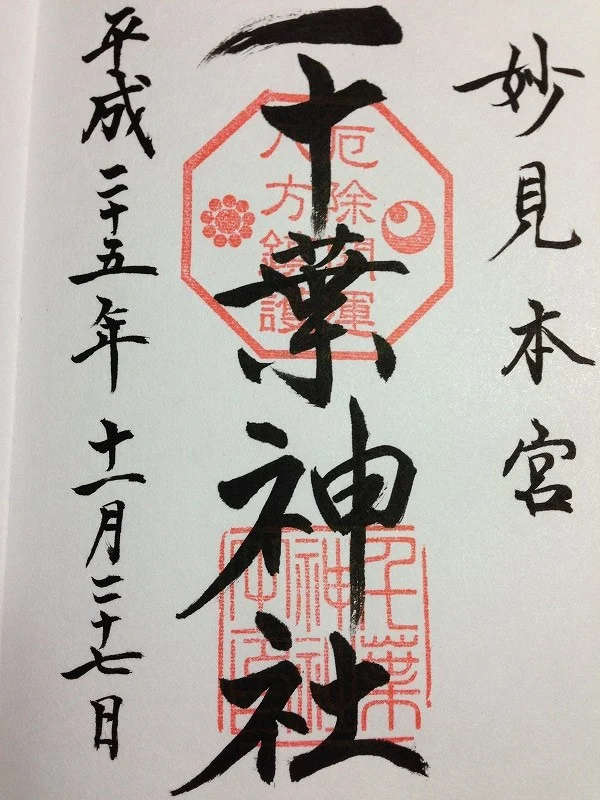
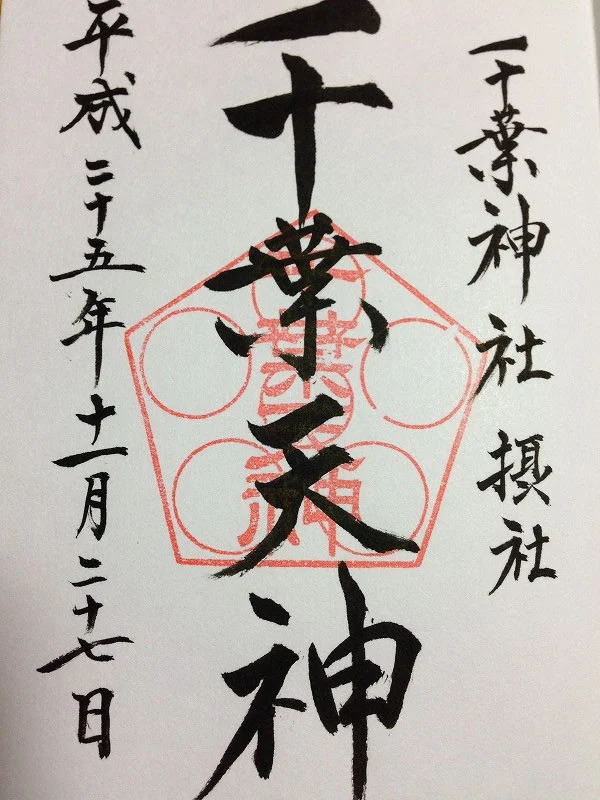
The overlaid photograph shows the goshuin I received in 2014, rather than the current commemorative cut-paper design. The account of Myoken worship and the grounds records an earlier visit; practical goshuin arrangements are given in the checked information above.
Access and location map
The official directions give a 10–15-minute walk from JR Chiba or Keisei Chiba Station. From JR Chiba's east exit, head towards Ekimae Odori, Chuo Park and Torimachi Park. The former city-loop C Bus ceased operating in November 2020; do not rely on that service in older articles.
Location: 1-16-1 Innai, Chuo-ku, Chiba City, Chiba Prefecture.
Open Chiba Shrine on Google Maps/Check route
Previous visit records and photos (posted in 2014)
The following account preserves the original visit experience and historical introduction. The photographs and encounters at the counter date from that publication; they do not describe a new visit. Old access instructions have been replaced by the checked information above. Historical accounts and spiritual benefits are presented as traditions and beliefs.
Goshuin "Chiba Shrine" (Chiba City, Chiba Prefecture)
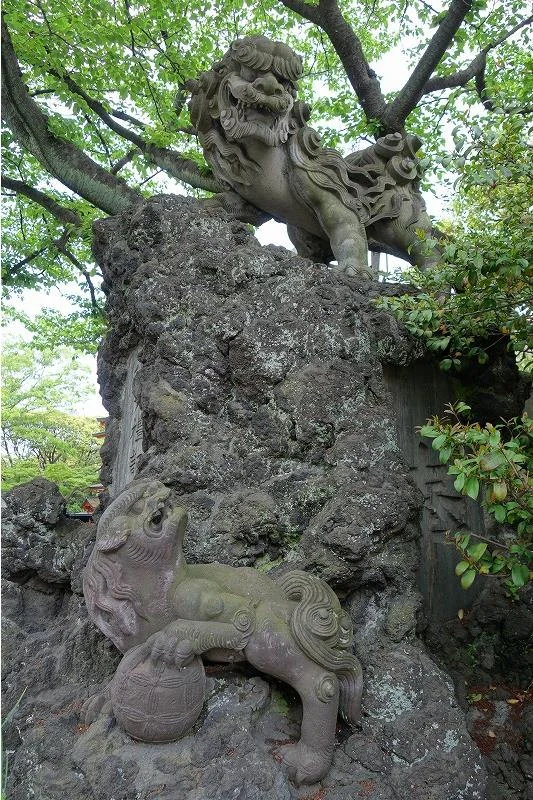
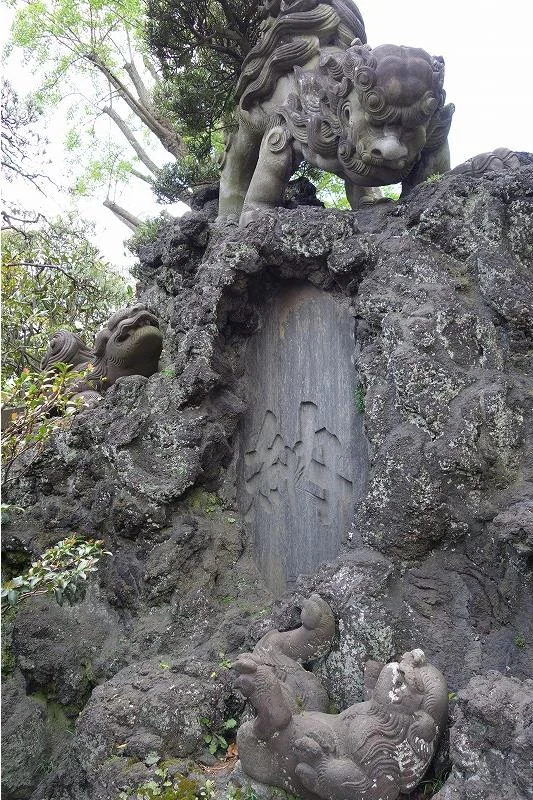
Enshrined deity Main enshrined deity Hokushin Myokenson Seio (=Ama no Onakanushi Okami)
Affectionately called Myoken-sama, the deity is associated with the North Star and Big Dipper, governing the stars, human destiny and protection in every direction.
Aiden God Futsunushi-no-Mikoto (Futsunushi no Mikoto) and Yamato Takeru no Mikoto (Yamatotakeru no Mikoto)
Futsunushi-no-Mikoto is the deity enshrined at Katori Shrine, a subsidiary shrine outside the grounds.
It is said that the grounds of Katori Shrine were ceded and Myoken was enshrined there, so it was decided to enshrine it as the main shrine.
Yamato Takeru-no-Mikoto is the deity enshrined to protect the Kanto region.
There is a legend that when he died and became a swan, he flew to the northern sky (=7 Myoken), so there is a theory that he was enshrined with him as a divine messenger, but the details are unknown (excerpt from Chiba ShrineHP)
[Good luck to ward off misfortune] [Good luck]
Since it is a god that protects the direction, it is also said to be the ancestor of Nine Star Ki and Yi Studies, and is said to have divine virtues.
Bunreisha/Sonseiden
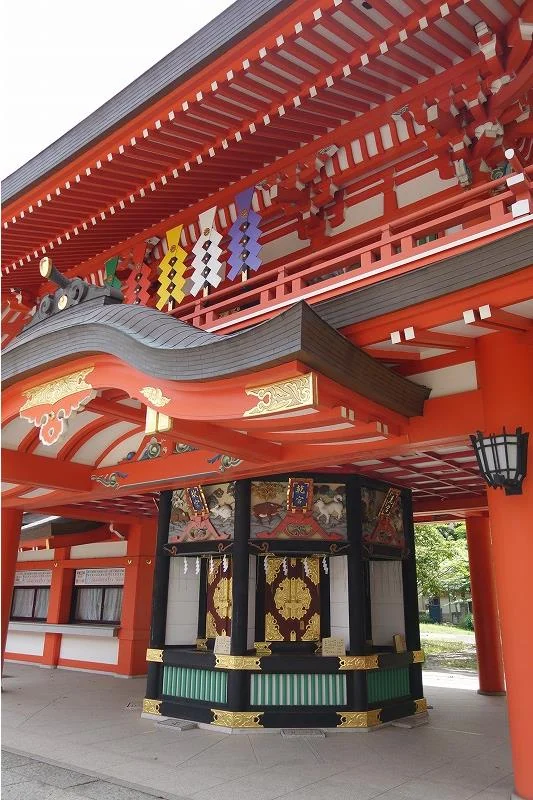
Sonseiden was built in Heisei 12 (2000) to mark Chiba Shrine's 1,000th anniversary. It combines the form of a two-storey gate with a shrine building.
Sonseiden is said to be divided into “Fukutokudenden” in the center, “Nichitenrou” in the east, “Gettenrou” in the west, and “Kaundenden” on the upper floor.
Shrine building
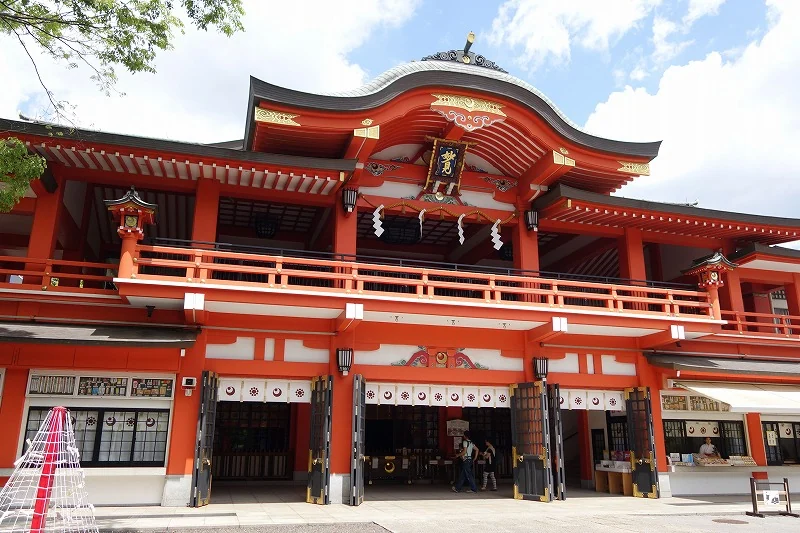
The present shrine building was completed in Heisei 2 (1990), with worship halls on both its upper and lower levels.
Chiba Tenjin
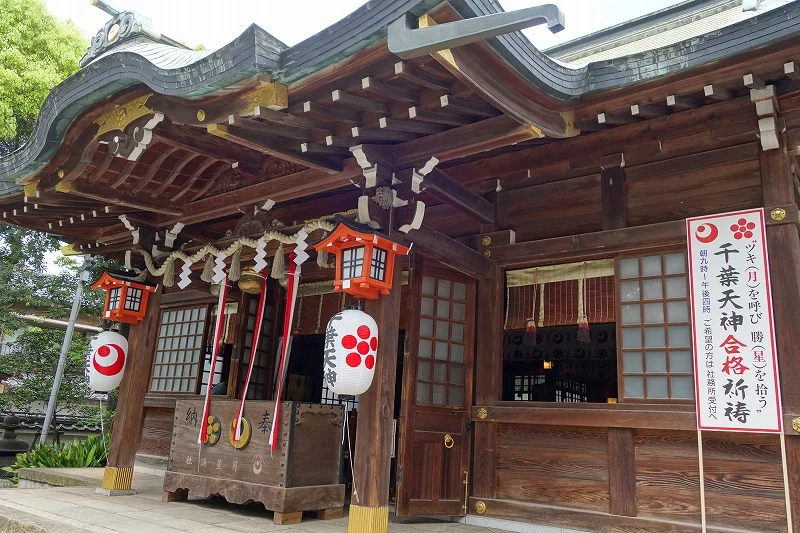
Sugawara no Michizane, the god of learning worshiped at the end of the Heian period, is enshrined here.
Suesha
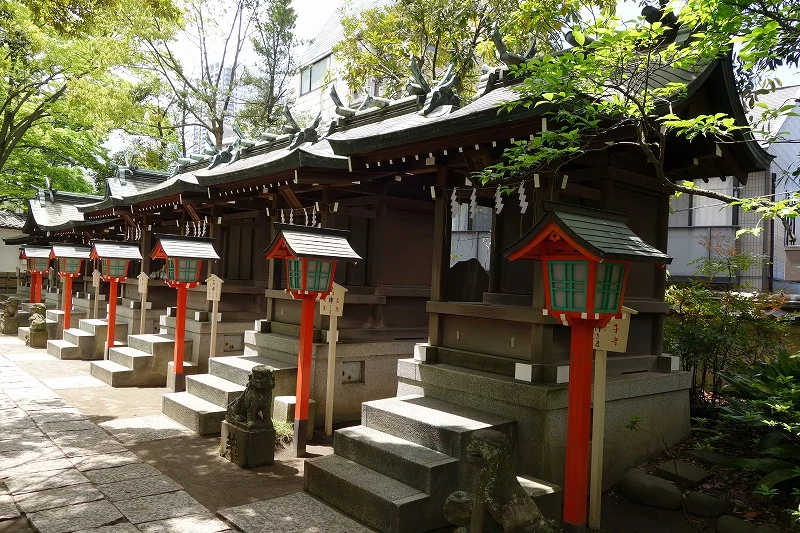
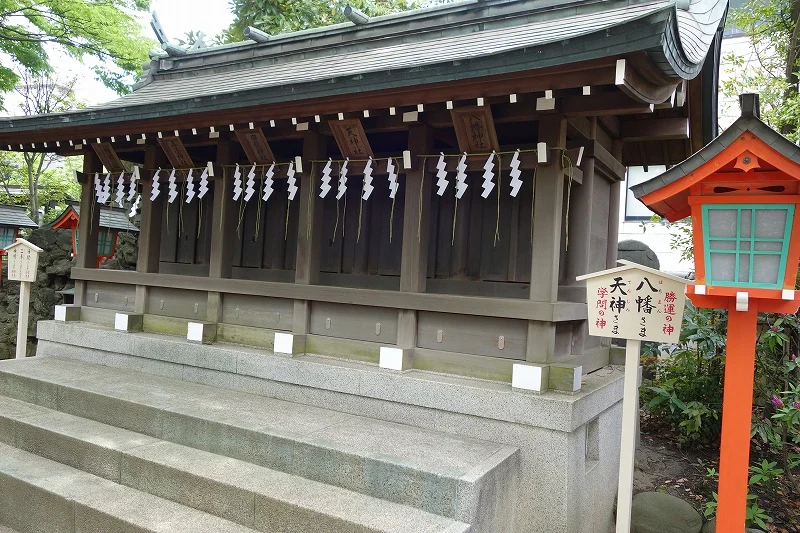
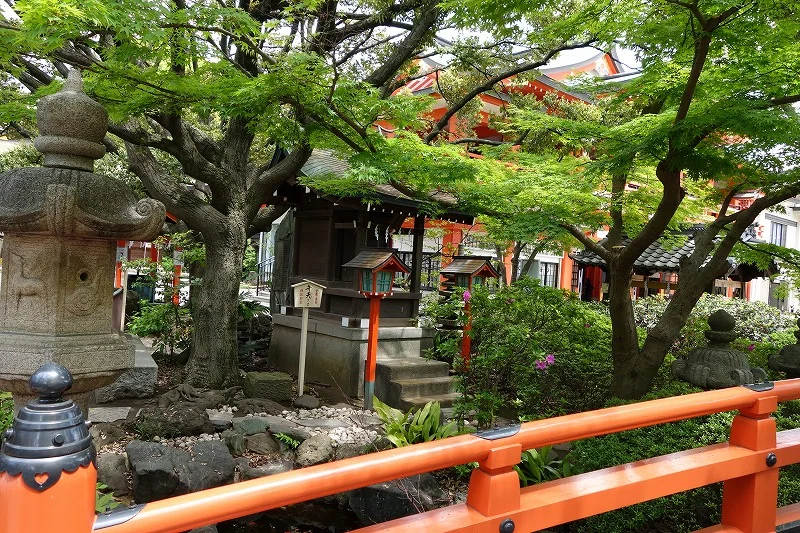
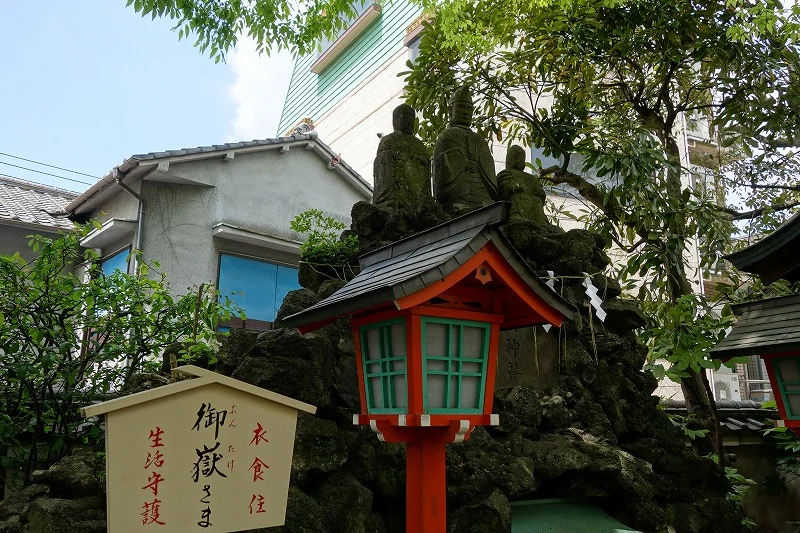
Katori Shrine “National security” “Earthquake protection”
Uba Shrine “Childcare” “Babysitting”
Hoshi Shrine “Warding off evil and good luck”
Ishijinja “Personal Safety” “Extension of Life”
Inari Shrine “Good harvest” “Prosperous business”
Kotohira Shrine “Marriage” “Prosperity in business” “Traffic safety”
Nishinomiya “Safe and abundant catch” “Prosperous business”
Hachiman Shrine “Luck” “Game”
Tenjin Shrine “Examination Pass” “Academic Improvement”
Hie Shrine "Good health" "Home protection"
Mitsumine Shrine “Fire Prevention”
Shinmeisha “Sun God” “Joyfulness Award”
Mitake Shrine “Food, Clothing, and Shelter” “Lifestyle Protection”
Itsukushima Shrine “Safe delivery protection” “Technical improvement” “Fukutoku treasure”
Misu no Miya “Prolongs life and good health” “Protects safe childbirth”
Myoken Pond
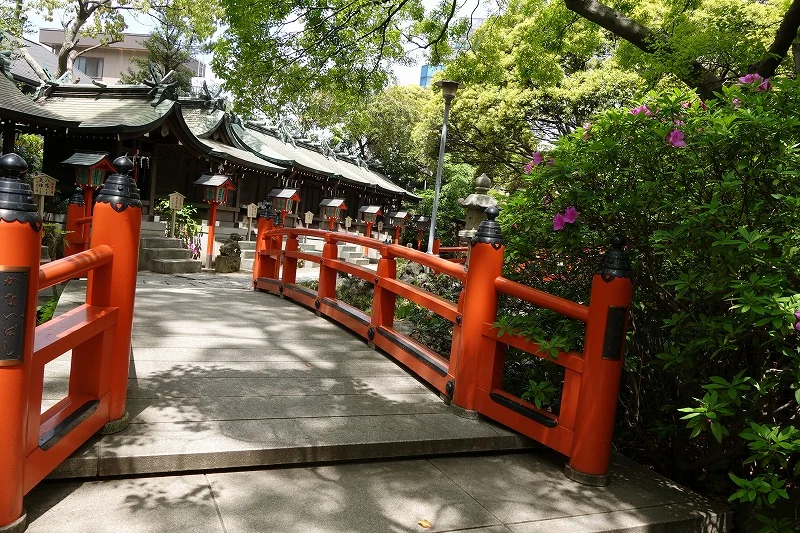
This pond is fed by the sacred Enju-no-I spring within the grounds. The vermilion bridges are named Negai-bashi and Kanai-bashi.
Mizunomiya
Mizumioyanokami, the god who rules over the dragon and water gods, is enshrined here.
Enju no I
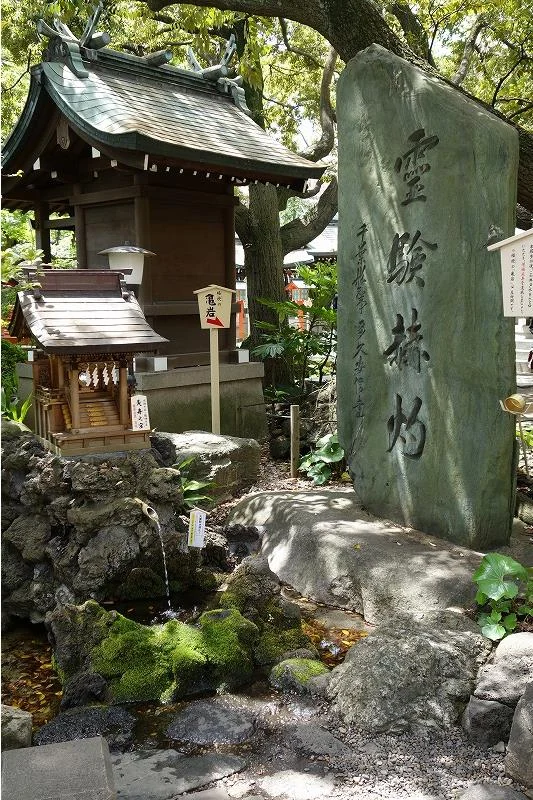
Known as a miraculous water since ancient times. You can also take water.
Notes from the visit
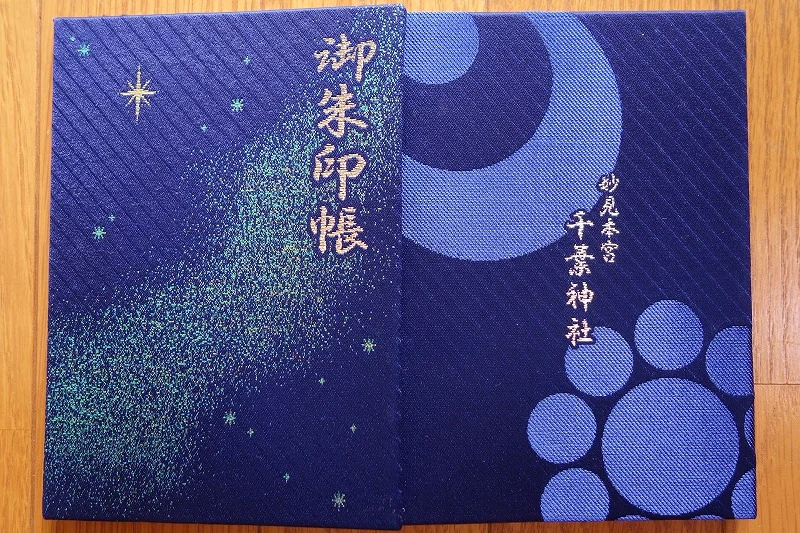
I was able to request goshuin at the shrine office next to the shrine building, but there seemed to be a Shinto priest permanently stationed there.
You can get two types: Chiba Shrine and Chiba Tenjin.
There is also the original goshuin book (¥1500, stamp fee not included).
Sources and scope of verification
- goshuin · goshuin book | About Chiba Shrine | The main shrine of Myoken-sama, who protects against evil and brings good luck and exorcism from all directions Chiba Shrine: Engraving from 9:00 to 17:00, 500 yen, blank paper goshuin book 1,500 yen, no mailing, writing suspended, commemorative red stamp in stock.
- Transportation information | Main shrine of Myoken-sama, which protects against evil spirits and protects against evil spirits Chiba Shrine: Location, approximate walking distance from Chiba Station, C bus service suspended
Official sources were checked on 2026-11-07. We are unable to confirm the date of visit and the remaining number of commemorative goshuins at this time. Designs, prices and arrangements shown in earlier photographs may have changed.
Goshuin and travel information has been checked against official and other cited sources, with unconfirmed points identified. Earlier photographs and personal experiences remain records of their original visits. Check the stated dates for limited designs.