A goshuin is a vermilion seal and calligraphic inscription received as a record of visiting a shrine or temple. At temples, it may also record nokyo, an offering of copied sutras. Understanding its words and background makes opening your book a way to remember the prayers and experiences of that day.
What is goshuin? Meaning you should know first
- How to read
- Pronounced as "goshuin".
- Something that represents
- A record of visiting a shrine or temple, or of making a sutra offering. Its specific meaning and requirements follow the guidance of the individual site.
- What is written in the Lord
- Vermilion seals, calligraphy such as the shrine or temple's name, and the date of the visit. Not every goshuin has the same arrangement.
- How to receive
- A goshuin may be handwritten directly in your book or supplied on a separate sheet.
If this is your first time, it may be easier to understand if you think of it as “an important record of the places and days you visited.” However, it is important to note that it is not only a fun record, but also that it is connected to the beliefs and prayers of the temple or shrine.
What is written on goshuin as seen in the photo
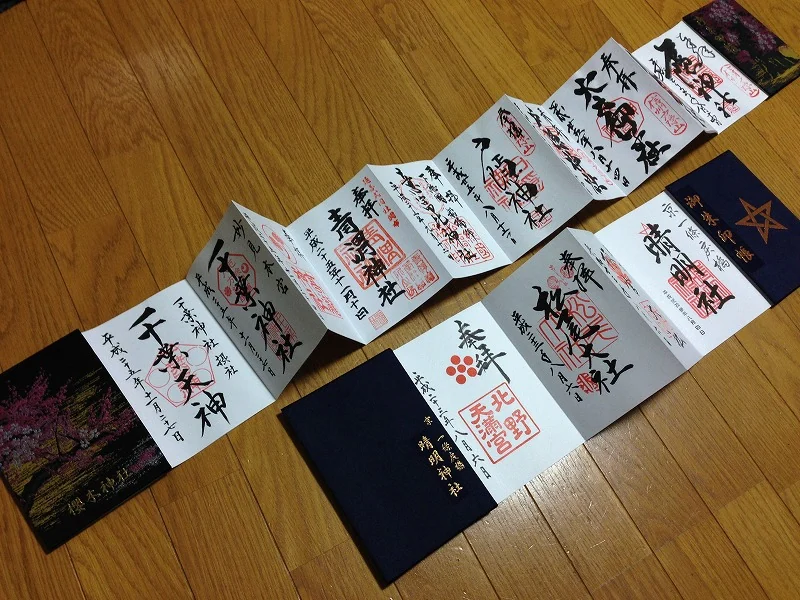
In the first photo, you can compare the vermilion stamp, black letters, and date attached to the edge. The large letters written in the center are not necessarily the names of temples and shrines. For example, you can also see the word “hohai” on the notebook at the bottom of the photo.
| Viewing part | Example of what is written | Clues when reading |
|---|---|---|
| Vermilion Seal | Names of temples and shrines, marks related to objects of faith, etc. | It may overlap with text. The shape and arrangement also differ depending on the temple. |
| Black text | Temple name, name of principal image, worship, daimoku, etc. | Don't judge by the large letters alone; also look at the surrounding letters and the official explanations of the temples and shrines. |
| Date | Year, month, day, etc. of your visit. | It helps you remember the season and who you visited with. |
For example, Sengakuji's official guide explains the principal image's name and seals representing Buddhism's Three Treasures. Reading these words and symbols can reveal what a particular temple or shrine values.
What is presented here is a general view. In addition to being written with a brush, there are also forms such as printing and paper cutting. Don't decide on the value or meaning based on appearance alone; check the explanation of the temple or shrine that is awarding it.
The origin is related to the proof of copying the sutras.
The Association of Shinto Shrines explains that goshuin may have originated as receipts for copied sutras offered to religious sites, later becoming records of visits as well. No single starting year or detailed origin can be stated for every shrine and temple.
In the past, shrines and Buddhism were more deeply connected than they are now. The example introduced by Association of Shinto Shrines of dedicating scriptures to Itsukushima Shrine also provides clues to the background. The reason why goshuin is found in both shrines and temples can be understood from its relationship with history.
The connection with nokyo survives today. Sengakuji's official shuin-counter guide describes copying a sutra, offering it and then receiving a goshuin. Check the instructions for each place rather than assuming the same conditions apply everywhere.
What is goshuin handwritten directly in your book, pre-written goshuin on a separate sheet, and the title?
When researching goshuin, you will come across words related to how to receive it and what is written. First of all, knowing the following differences will make it easier to read information about temples and shrines.
| Words | Meaning | Things to check |
|---|---|---|
| Goshuin handwritten directly in your book | How to write directly on the goshuin book etc. you brought with you | Check the applicable dates, designs and requirements for your book. |
| Kakioki: a separate-sheet goshuin | A goshuin prepared in advance on a separate sheet | Decide whether to attach it to your book or keep it safely as a separate sheet. A separate-sheet goshuin is not necessarily printed. |
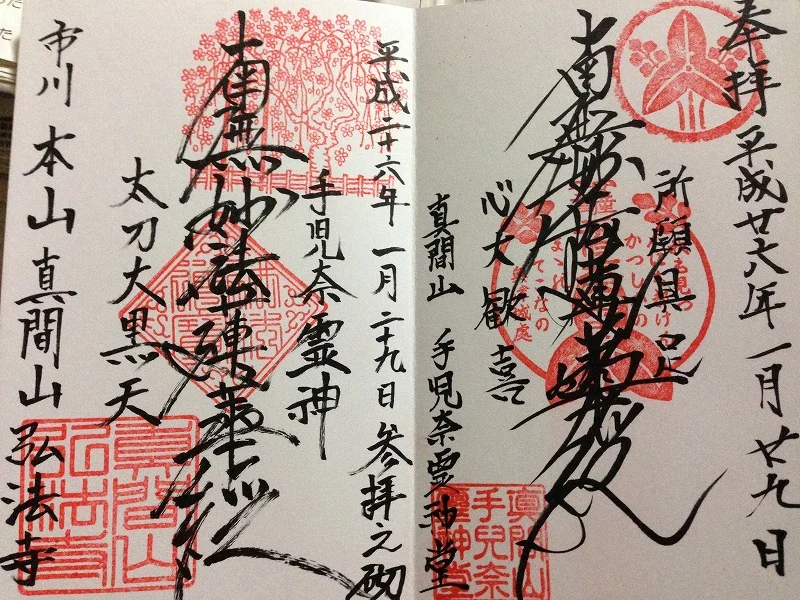
| Goshudai: an odaimoku inscription | An inscription of “Namu Myoho Renge Kyo,” the sacred title of the Lotus Sutra, particularly valued at Nichiren Buddhist temples. | Please check with the temple you are visiting regarding how to handle the head diary and other books containing goshuin. |
The explanation of the title is also based on the 2016 temple newsletter of Myokoji Temple. This is a resource to help you understand the meaning of the words, and does not guarantee the current acceptance conditions of each temple.
What is the meaning of collecting? How do you think about the relationship with profit?
The explanation of goshudai also draws on Myokoji's July 2016 temple newsletter. It explains the term, rather than establishing each temple's current service arrangements.
Your book preserves visits together with their dates. Looking back can recall the scenery, time spent in the grounds and the history of each place. Focusing only on adding more goshuin can leave too little time for the visits themselves.
Some visitors hope for spiritual blessings, but collecting more goshuin does not guarantee fulfilled wishes, nor is a direct inscription necessarily more spiritually beneficial than a separate-sheet version. Beginners should not judge by quantity or format.
Things to check before receiving your first goshuin
First, choose one shrine or temple that you would like to visit, and check the following items on the official website or official guide.
- Are you awarding goshuin? Where is the counter?
- Dates and hours when goshuin are issued; these may differ from the hours when the grounds are open.
- Whether goshuin are handwritten or supplied on a separate sheet, and any requirements such as a reservation, sutra copying or a sutra offering.
- Are there any specifications regarding the amount to be paid and the form to bring?
On the day of the visit, we value the visit and if there is a designated order for reception, we will follow the instructions. You may not be able to take goshuin due to absence or an event, so please do not plan your schedule with the assumption that you will definitely be able to take goshuin.
It is easy for first-timers to get lost.
Can I take the test without goshuin book?
Some temples and shrines offer paper forms, but not all temples and shrines have them. Some temples will ask you to bring a notebook with you. Please do not assume that a notebook or memo pad can be used instead, but rather check the instructions for the place you are visiting.
Do shrines and temples have different meanings?
Goshuin at shrines and temples share connections with worship and offerings, but may refer to different deities, principal images or the Lotus Sutra's title. Read each place's explanation rather than assuming a single nationwide rule.
Can I have a goshuin that is exactly the same as the sample?
There are differences in handwritten characters. In addition, the types and methods available may change depending on the season, the granting period, the absence of the person who will be available, etc. Don't take past photos as a sample of the present, prioritize the guidance of the day.
Record of goshuin seen in previous photos
I have left the photo published in the original article. The design, date, and awarded item in the photo are records at the time of posting, and do not mean that you can still receive the same item.
Source and scope of confirmation
- Association of Shinto Shrines|About goshuin: I referred to the explanation of the relationship between goshuin and worship, and the origin related to the sutra.
- Miyagi Prefectural Shrine Office|goshuin Manners: Refer to worship visits, prior confirmation, and consideration after receiving.
- Sengakuji | goshuin: We have confirmed the explanation of the temple's characters and seals, as well as the instructions for copying and delivering sutras at the general reception desk.
- Myokoji Temple | About goshuin and Gojime (Temple News July 2016): I referred to the explanation of the word Gojime.
This page does not cover reception hours, award fees, and reservation conditions for individual temples and shrines. Please check the latest official information for the temple/shrine for specific conditions for visiting.
The meaning, origins and terminology of goshuin were checked using official materials. Photographs record a visit published in 2014. Check each shrine or temple's latest official information for current hours and offerings.