Mamasan Guhoji is a Nichiren Buddhist temple in Mama, Ichikawa. This guide corrects the reading of its name and presents earlier odaimoku inscriptions and photographs alongside visiting information from official temple and sect sources.
Goshuin/Visit confirmation items for Mamasan Guhoji Temple
- Official name/pronunciation
- Mamasan Guhoji Temple. This is a different temple from Guhoji Temple in another prefecture with the same name.
- Sects and photos
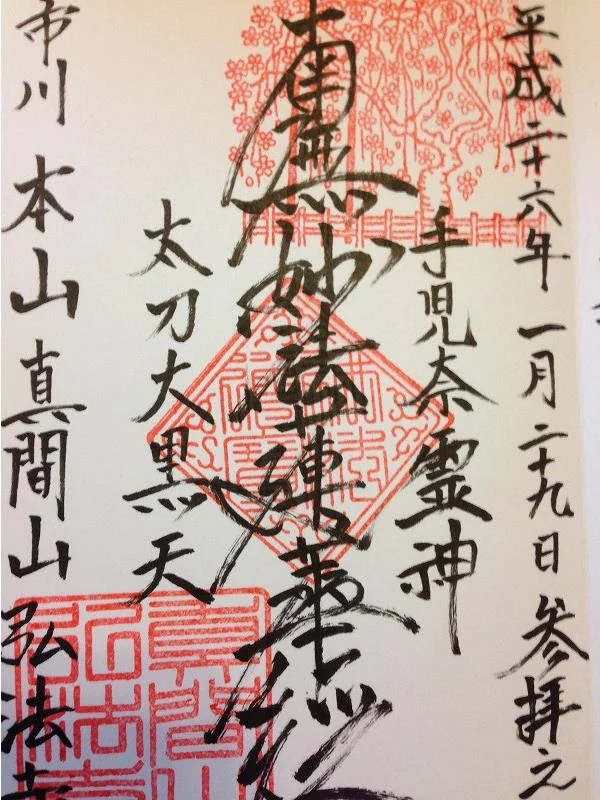
- A Nichiren Buddhist temple. The odaimoku inscription shown records a visit in 2014.
- Current acceptance conditions
- Dedicated hours, offerings and current methods of issuing odaimoku inscriptions or goshuin could not be verified.
- How to read history
- The stories of the founding and name changes related to Gyoki and Kukai are introduced as the auspicious origins of the temple.
The characters in the title and how to read the temple name
The earlier inscription combines the Lotus Sutra's title, or odaimoku, with temple seals. Although the characters can be read as Koboji elsewhere, this temple in Mama is pronounced Guhoji. Include its location when checking a map or enquiring by telephone.
The same form of inscription as the photograph is not guaranteed today. Tell the counter what you would like, including which odaimoku or goshuin book you have, and follow the instructions given on the day.
The tradition of Tegona and its history as a Nichiren sect temple
Introduction to Nichiren sect temples explains the origin related to the story of Tegona and its subsequent history as a Nichiren sect temple. Please do not treat the age of the tradition as the same as historical fact, but read it as an origin that is cherished by the temple.
Nearby Tegona Reijindo is at 4-5-21 Mama, while Guhoji is at 4-9-1 Mama. Allow time to visit each and confirm its counter arrangements. The photographs and odaimoku offer a record of Mama's religious traditions.
Access and location map
The Nichiren sect temple is a 15-minute walk from JR Ichikawa Station, and a 10-minute walk from Keisei-Kokufudai Station and Ichikawa-Mama Station. Please allow for walking speed and climbing to the shrine grounds. There is a parking lot within the premises. The temple phone number is 047-371-2242.
Location: 4-9-1 Mama, Ichikawa City, Chiba Prefecture.
Open Mamasan Guhoji Temple on Google Maps/Check route
Previous visit records and photos (posted in 2014)
The following account preserves the original visit experience and historical introduction. The photographs and encounters at the counter date from that publication; they do not describe a new visit. Old access instructions have been replaced by the checked information above. Historical accounts and spiritual benefits are presented as traditions and beliefs.
Guhoji Temple where you will be greeted by magnificent weeping cherry blossoms as you climb the stairs in front of Mt.
The main hall enshrines rare statues of Shakyamuni Buddha, the Four Bodhisattvas, and the Four Heavenly Kings, which are said to be the oldest in the Nichiren sect.
The monk I asked for goshuin was very kind, and while showing me around the main hall and Soshi-do hall, he taught me about auspicious origins and the principal image. I had a wonderful time there. This is one of the recommended temples.
Nichiren sect head temple Mamasan Guhoji Temple
Kaiki
Six Elderly Monks Iyo Ajari Nichicho Saint
Auspicious origin
According to the temple's tradition, Gyoki built a temple in the Nara period to commemorate the tragic local woman Tegona.
Kobo Daishi Kukai is said to have rebuilt its temple complex during the Heian period and renamed it Guhoji.
In the Kamakura period, a religious debate between the abbot and Nichijo led to its development as a centre of Lotus Sutra practice, continuing to the present.
①Tegona Reijindo→
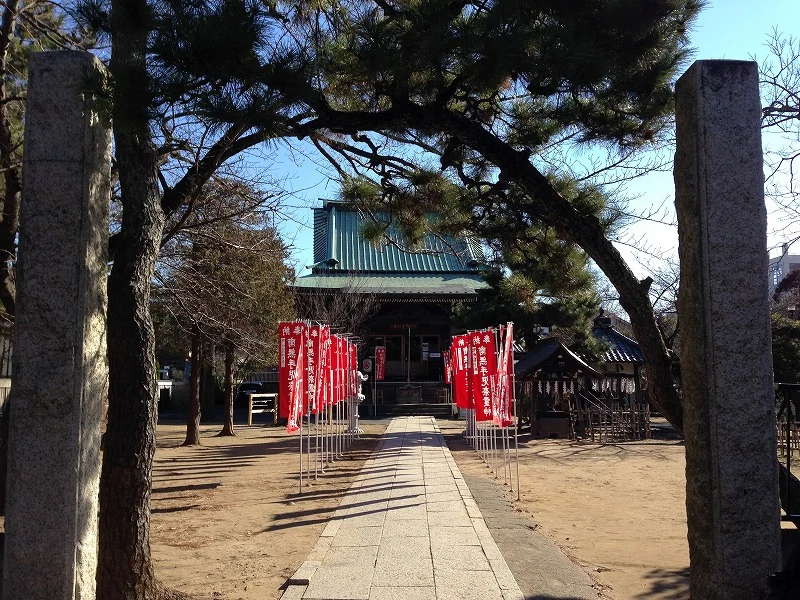
At the foot of the hill of Mama stands the hall dedicated to Tegona.
She is associated with finding a good partner, conceiving a child, safe childbirth and raising a healthy child.
②Niomon
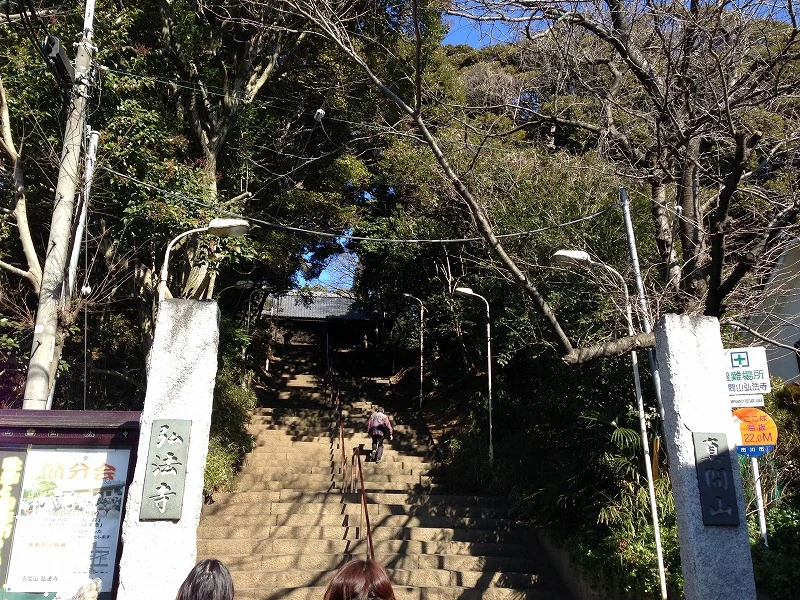
A mountain gate that stands at the top of about 60 steps in front of Mt.
Inside was a magnificent Nio statue guarding it.
To the left of the 27th step from the bottom of the stairs is a mysterious stone called the [Tear Stone] that is always wet.
During the Edo period, Nagayori Suzuki, who was transporting stones for the construction of Nikko Toshogu Shrine, felt that Guhoji Temple had something to do with Buddha after his boat stopped moving at Ichikawa, so he decided to use it for the stone steps of the temple on his own. Nagayori was later held responsible by the shogunate, and committed seppuku on the stone steps. It is said that the reason why the stone is always wet is because of Nagayori's blood and tears.
...When I came up the stairs without knowing anything, I thought that I had probably stepped hard enough, so I clasped my hands together and apologized as I was leaving. .
③Main shrine (Sakyamuni Buddha)
The hall enshrines a wooden Shakyamuni Buddha making the teaching mudra, traditionally consecrated by Nichijo and described as one of the oldest such images in the Nichiren school.
It is flanked by the Four Bodhisattvas—Jogyo, Muhengyo, Jyogyo and Anryugyo—and the Four Heavenly Kings, Jikokuten, Komokuten, Zochoten and Tamonten. These valuable figures are said to date from the Kamakura period.
Thanks to the monk's kindness, we were able to view them close to the altar, a deeply moving experience.
④Tachi Daikokutendo
It enshrines a small statue of Daikokuten, which is said to have been carved by Nichiren Daishonin himself and carried in his pocket at all times when he was training on Mt. Hiei.
It is said that the figure holding a long sword is said to have a miraculous effect on praying for [warding off evil spirits], but unfortunately, the door to the temple was closed on the day I visited, so I was not able to see it.
According to the monks, they visit the shrine one day every month to pray on Koshi Day, and you can visit it during memorial festivals.
⑤Jakkodo Kannon Temple
It was built as a mausoleum for eternal memorial service to Heisei 7 (1995).
I didn't notice that it was located at the back of the main hall, so I couldn't visit it.
⑥Zoshido
Nichiren Daishonin is enshrined at the centre, together with Nichijo and Nichinichi.
The hall seemed to have been built only a few years before my visit and smelled of cypress. Its front and rear have different architectural forms, associated with an auspicious meaning.
⑦Bell Tower
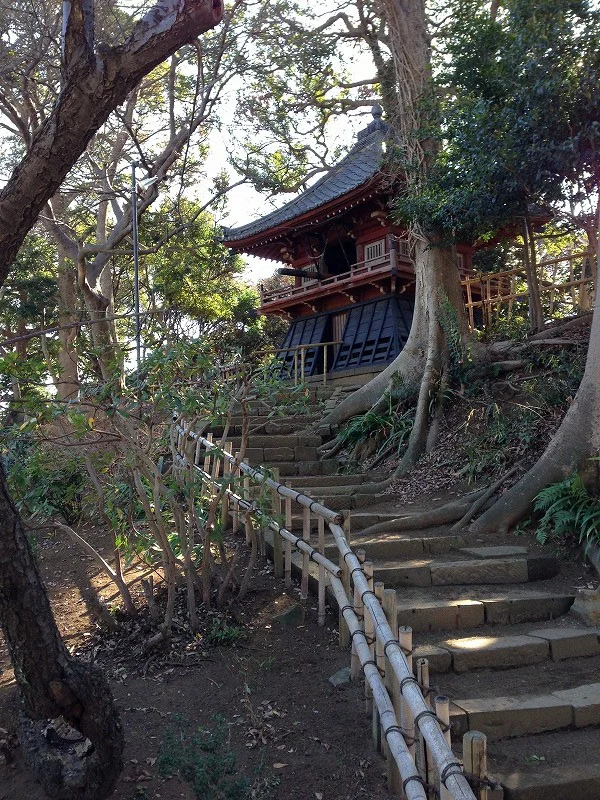
It is located on a slightly raised area just after entering the Sanmon gate.
It is said that you can see a panoramic view of Ichikawa city from Tsukimi no Hiroba.
Notes from the visit
Visiting hours
Approximately 2 hours (including Tegona Reijindo)
Sources and scope of verification
- Nichiren sect temple page | Mamasan Guhoji Temple: Official name/pronunciation, history of Nichiren sect temple, location and transportation from station, parking lot
- Homepage of Nichiren Sect Head Temple Mamayama Guhoji Temple | Six Elderly Monks Iyo Ajari Nichicho Saint Kaiki: Information on the temple's location, phone number, and official website
Official sources were checked on 2026-11-07. The dedicated reception hours, amount, and recording method for the title/goshuin cannot be confirmed at this time. Designs, prices and arrangements shown in earlier photographs may have changed.
Goshuin and travel information has been checked against official and other cited sources, with unconfirmed points identified. Earlier photographs and personal experiences remain records of their original visits. Check the stated dates for limited designs.