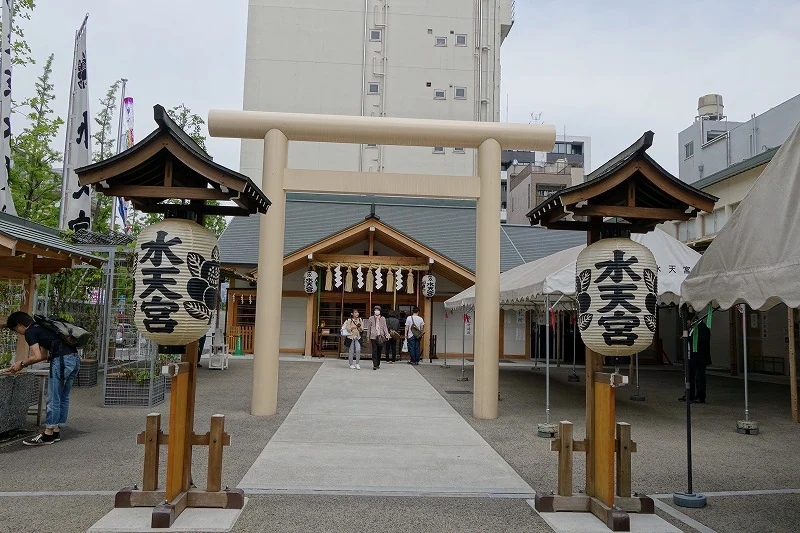
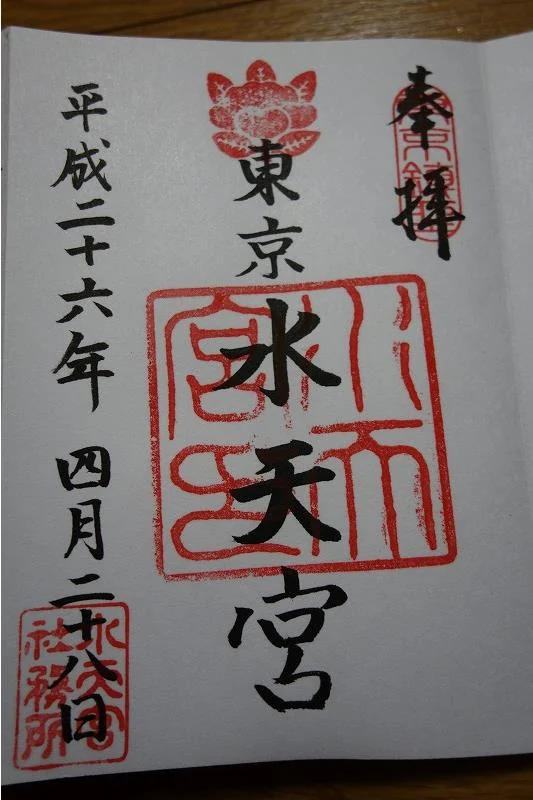
At Suitengu Shrine in Nihonbashi, Tokyo, we are guiding goshuin and goshuin book at the shrine. The goshuin and precinct photos in this article are records from my 2014 temporary shrine visit. The current place of worship is Suitengu Shrine in Kakigara Town, so please take a look at the photo and location separately.
Goshuin of Suitengu Shrine · Confirmation of worship
- Location of goshuin/goshuin book
- The official FAQ states that goshuin and goshuin books are available at the shrine.
- Open gate/God shrine
- The grounds normally open from 7:00 to 18:00, and the amulet counter from 8:00 to 18:00. Confirm whether the dedicated goshuin service closes earlier before visiting.
- Difference from prayer
- Prayers are accepted from 8:00 to 15:00. Please do not combine this with the goshuin counter or reception conditions.
- Photo and current location
- The precinct photo shown is Hamamachi Karimiya in 2014. The map shows the current 2-4-1 Kakigara-cho.
Before asking for goshuin at the shrine
You can confirm that goshuin and goshuin book are available in the official FAQ. On the other hand, the page I checked this time does not have details for goshuin alone, offering, or goshuin handwritten directly in your book and pre-written goshuin on a separate sheet on the day. Please inquire at the shrine office regarding the type of paper you wish to use and whether it is possible to record it in goshuin book.
Suitengu Shrine is a shrine that many people visit to pray for safe childbirth. Officials advise that times may change depending on festivals. Especially on Dog Day, it is best to read the restrictions on the number of people praying and the directions to the shrine before heading out.
Temporary shrine in 2014 and Suitengu Shrine that I am visiting now
The original article was a record of a visit to the temporary shrine during the rebuilding period. If you introduce that photo as the current shrine building, it may cause the location to be confused on site. At the beginning and in the past records, we specified that the photo was of a temporary shrine.
The current location and map are based on the official access guide. You can walk from Ningyocho Station as well as Suitengu Shrine-mae Station, so when combining this with visiting temples and shrines around Nihonbashi, please plan your route based on the latest location.
Access and location map
Currently a 1-minute walk from exit 5 of Suitengu Shrine-mae Station on the Tokyo Metro Hanzomon Line. 6 minutes walk from Exit A2 of Ningyocho Station on the Hibiya Line, 8 minutes walk from Exit A3 of Ningyocho Station on the Asakusa Line. If you are driving, there is a paid parking lot, but it may not be possible to park on days such as Dog Day. Please be careful not to go to Hamacho Karimiya in the past.
Location: 2-4-1 Kakigara-cho, Nihonbashi, Chuo-ku, Tokyo.
Open Suitengu Shrine on Google Maps/Check route
Previous visit records and photos (posted in 2014)
The following account preserves the original visit experience and historical introduction. The photographs and encounters at the counter date from that publication; they do not describe a new visit. Old access instructions have been replaced by the checked information above. Historical accounts and spiritual benefits are presented as traditions and beliefs.
This shrine is very famous in the Kanto area for praying for safe childbirth, and many pregnant women come to worship on Dog Day.
Since it is a company of Nihonbashi Seven Lucky Gods, Hosho Benzaiten is also enshrined in the grounds.
Enshrined deities
Ameminakanushi no Okami
A god who is said to have appeared at the highest point in the sky called Takamagahara during the time of Genesis, when heaven and earth were still in chaos.
[Prayer for safe delivery] [Child giving]
It is said that it is believed to have the divine virtue of creation, as it is said to be the ancestral god of Japanese gods.
Emperor Antoku
Emperor of the Heike family, famous for The Tale of the Heike, whose parents were Emperor Takakura and Kenreimonin. He was defeated by the Genji clan at the Battle of Dan-no-ura and ended his life by throwing himself into the sea at the age of eight.
Kenreimonin
Daughter of Taira no Kiyomori and Tokiko, and consort of Emperor Takakura. After the Battle of Dan-no-ura, Kenreimonin devoted her remaining life to prayers for the Heike.
Second place nun (Ni no Ama)
Taira no Kiyomori's wife Tokiko took Buddhist vows after his death. She entered the sea at Dan-no-ura with Emperor Antoku.
History and traditions
It is said that after the Heike was defeated in the Battle of Dan-no-ura, a court lady who served Kenreimonin fled to Saginogagahara in Kyushu and built a shrine to mourn the spirits of the Heike family.
Tokyo Suitengu Shrine is said to have originated during the Edo period when the Arima family, the lords of the Kurume domain, wished to enshrine Suitengu Shrine in their mansion while moving to Edo, so they set up an in-house shrine in the mansion to enshrine the god.
It was originally worshiped as a shrine deity, but due to the large number of requests from the general public to visit, the mansion was opened to the public and allowed to worship once a month on a festival day.
Early in the Meiji era, the mansion shrine moved to Akasaka and subsequently to its present Nihonbashi location.
200th anniversary of Edo enshrinement
The shrine building was destroyed by fire during the Great Kanto Earthquake, but it was apparently rebuilt at a later date.
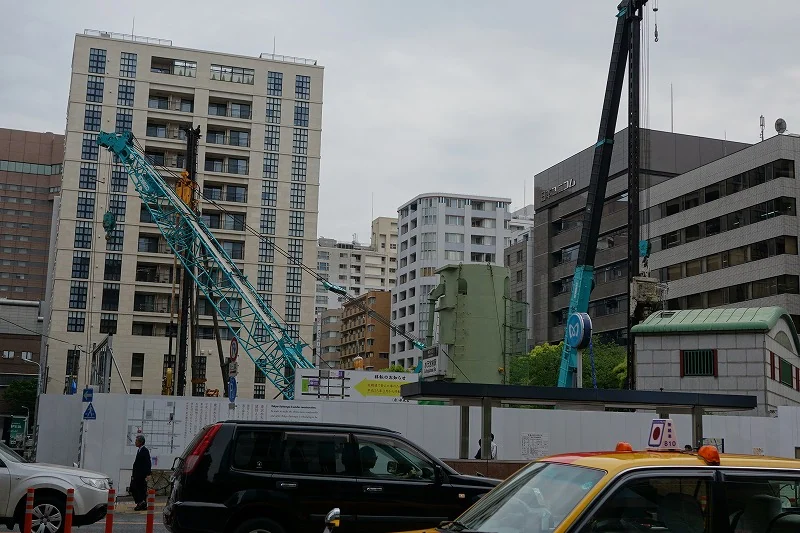
The shrine building is also being renovated to commemorate the 200th anniversary of the Edo enshrinement at Heisei 30 (2018), and when I visited to worship, it was in the middle of construction.
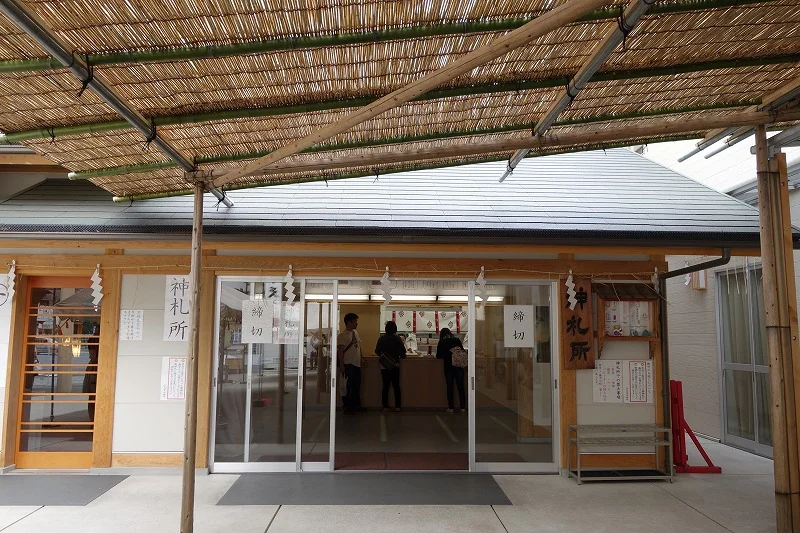
Currently, the temporary shrine has been relocated near Hamacho Station.
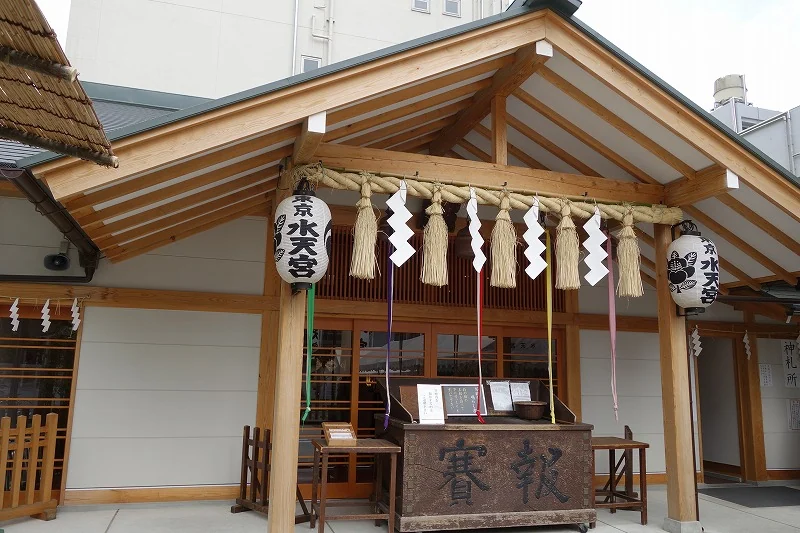
You can receive goshuin at the shrine office next to the shrine building.
Since Benzaiten of Nihonbashi Seven Lucky Gods is also enshrined, it seems that you can also receive goshuin there.
I only received goshuin from the shrine because I was planning to visit the Seven Lucky Gods again.
Free shuttle bus “Kodakara Bus”
It seems that Daan only operates on Saturdays, Sundays, holidays, Dog Day, and weekdays (Royal Park—Suitengu Shrine).
Royal Park is convenient because you can take the escalator to exit 4 from Suitengu Shrine Station on the Tokyo Metro Hanzomon Line.
Sources and scope of verification
- Access | Suitengu Shrine: Current location of Kakigara Town, walking guide by station exit, parking lot conditions
- Frequently Asked Questions | Suitengu Shrine: goshuin and goshuin book are handled at the sacred temple.
- Information on visiting hours | Suitengu Shrine: Gates open from 7:00 to 18:00, shrine shrines from 8:00 to 18:00, prayer reception from 8:00 to 15:00, changes due to festivals
Official sources were checked on 2026-11-07. At this time, we have not been able to confirm the closing time of reception for offering/goshuin for goshuin alone/how to record on the day. Designs, prices and arrangements shown in earlier photographs may have changed.
Goshuin and travel information has been checked against official and other cited sources, with unconfirmed points identified. Earlier photographs and personal experiences remain records of their original visits. Check the stated dates for limited designs.