Desk-researched model route / not yet field-tested
A seven-shrine walking model from Suginomori Shrine to Kasama Inari Tokyo Branch. This editorial order uses map walking directions and official information; it is not an officially prescribed itinerary. We have not field-tested this complete route.
Map walking estimate only; add time for worship, queues and crossings.
Seven 10-minute visits, about 30 minutes walking and 60 minutes for waits and breaks give roughly 2 h 40 min. This is an editorial planning example.
Based on Suginomori opening reception at 9:30; absence and changes remain possible.
View the seven-shrine walking route on the map
Walk from Suginomori Shrine to Kasama Inari Tokyo Branch via Koami, Chanoki, Suitengu, Matsushima and Suehiro. Zoom in to inspect the walking directions.
When opening Google Maps separately on a phone, use the two halves to keep the intermediate stops. Individual leg maps are in the stop list below.
Suitengu / Hosho Benzaiten → Kasama Inari Tokyo Branch
Check destination names and addresses before starting. The map service may change its suggested order or path.
Recommended order for seven shrines
The official approach to Suginomori is five minutes from Kodemmacho Station Exit 3. Finish near Hamacho Station after Kasama Inari Tokyo Branch. You may reverse the order, but rearrange stops to suit confirmed reception conditions if you hope to receive goshuin.
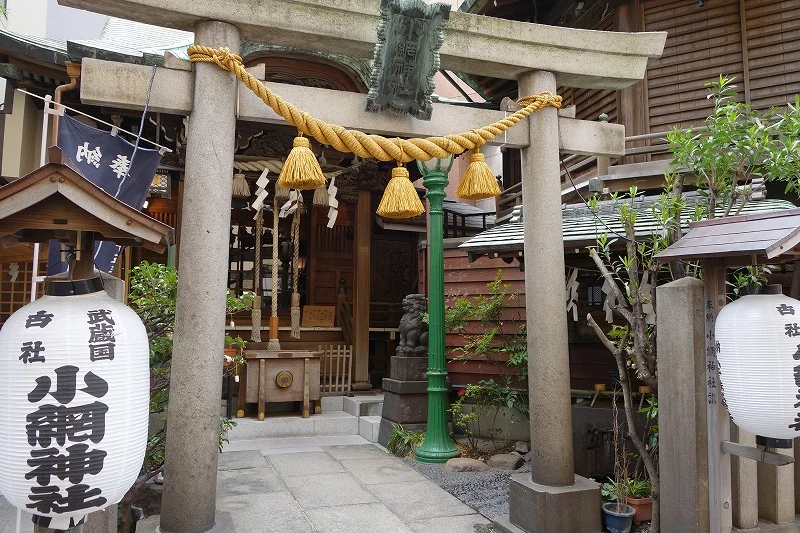
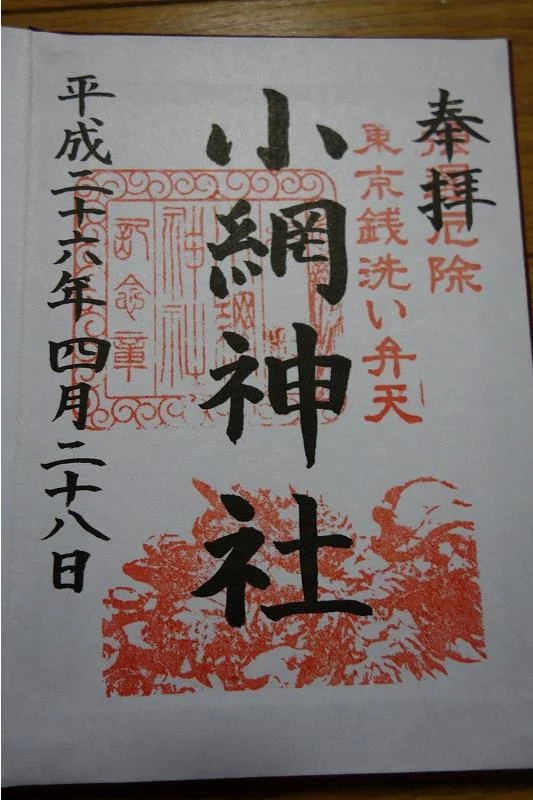
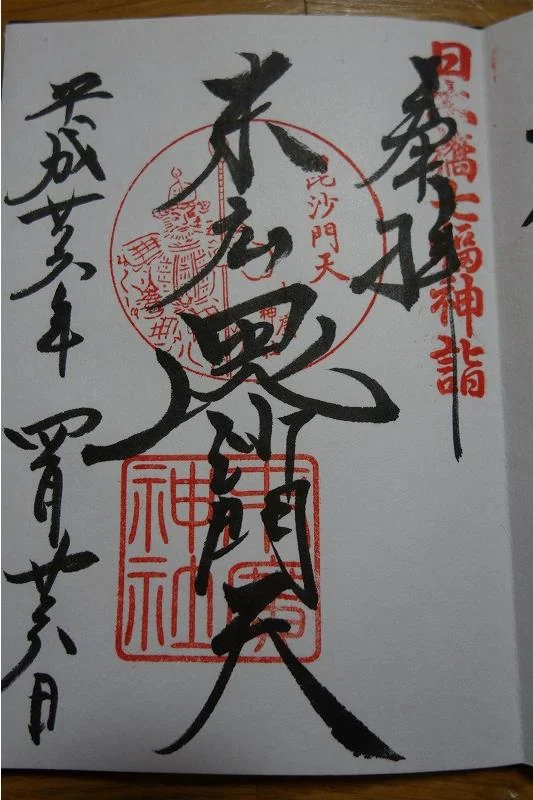
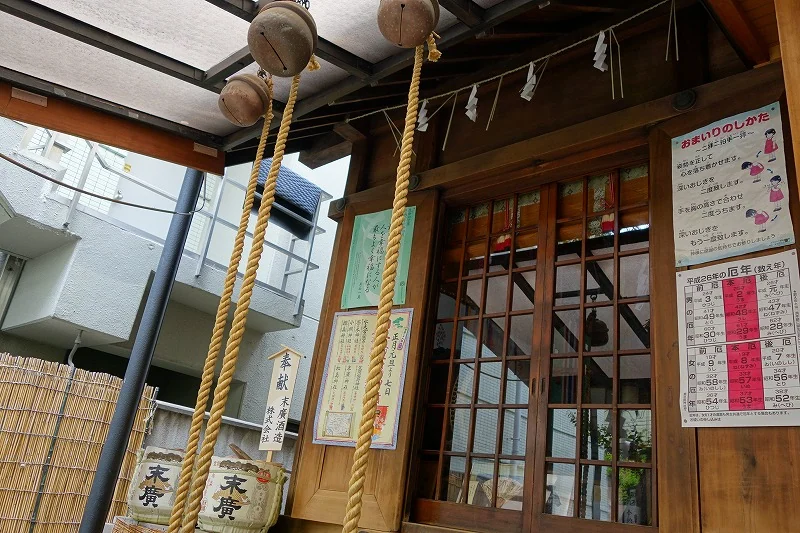
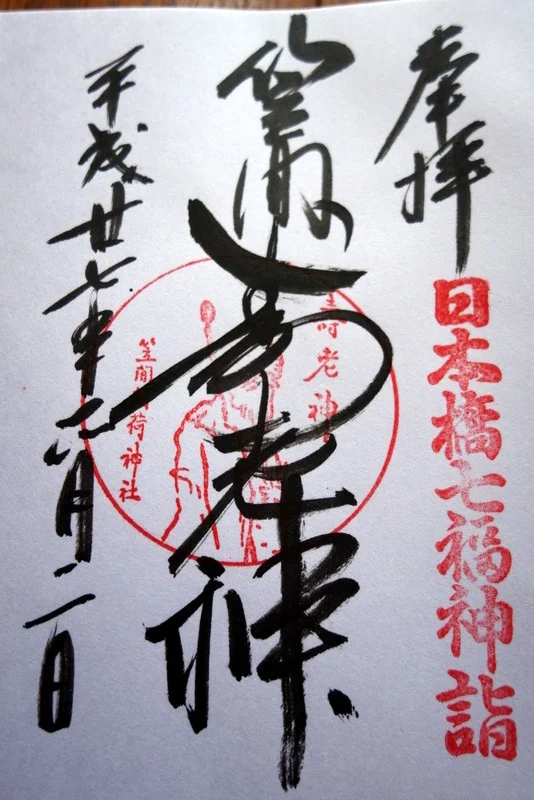
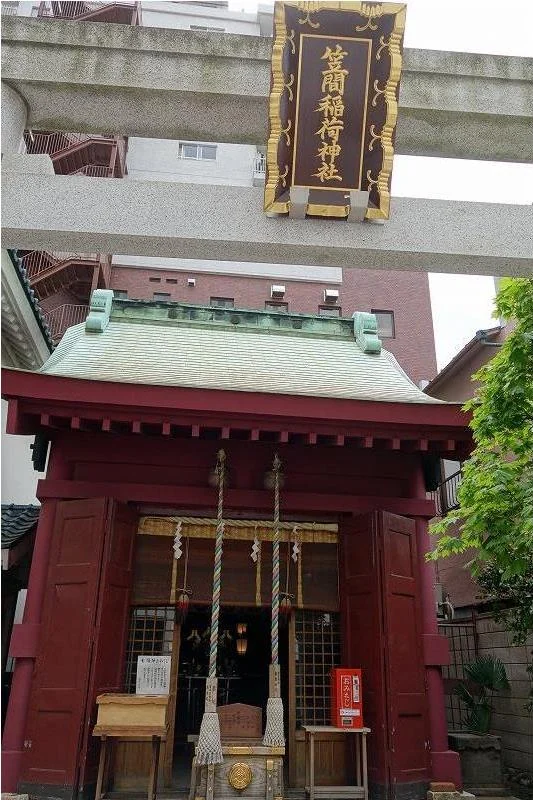
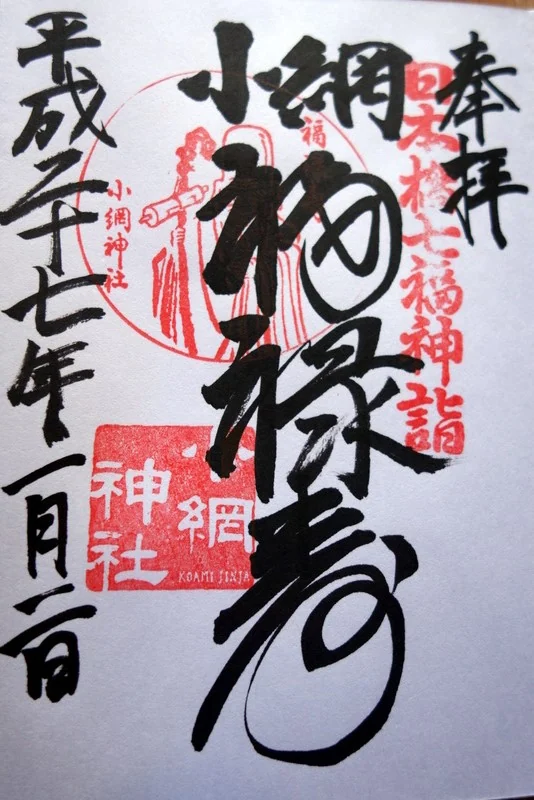
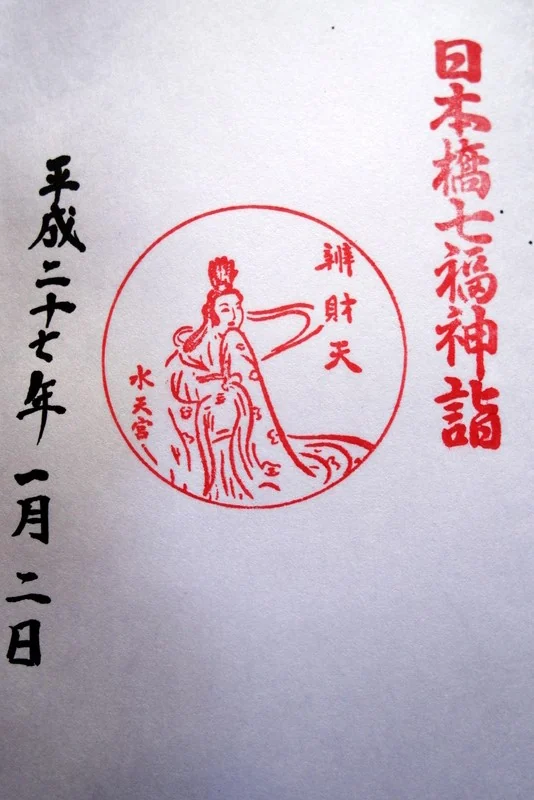
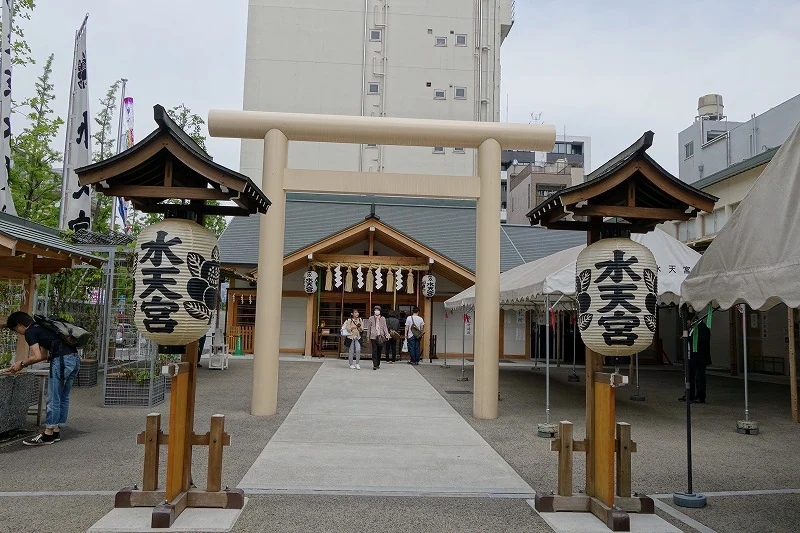
Photos come from this site’s earlier visit records. Suitengu is represented by a goshuin photograph from 2014. Stops without an available owner-provided photograph are shown without a thumbnail.
Suginomori Shrine / Ebisu
1-10-2 Nihonbashi Horidomecho, Chuo-ku, Tokyo
9:30–17:00, with irregular absences. Writing in a book is in principle on weekdays; stamp sheets are also listed.
To the next stop:600m / walk 9 min · Walking map for this leg
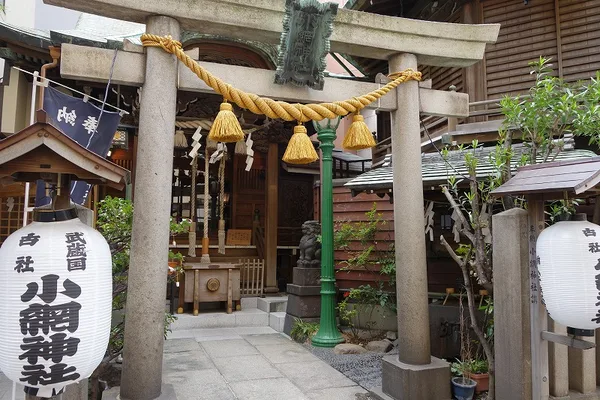
Earlier visit photograph Koami Shrine / Fukurokuju
16-23 Nihonbashi Koamicho, Chuo-ku, Tokyo
General amulet reception is 9:00–17:00; specific goshuin hours and method remain unconfirmed. The shrine asks visitors to avoid crowded dates.
To the next stop:400m / walk 5 min · Walking map for this leg
Chanoki Shrine / Hotei
1-12-10 Nihonbashi Ningyocho, Chuo-ku, Tokyo
Goshuin are handled by the office beside the shrine. Ordinary hours and book-writing availability are unconfirmed; check before visiting.
To the next stop:220m / walk 3 min · Walking map for this leg
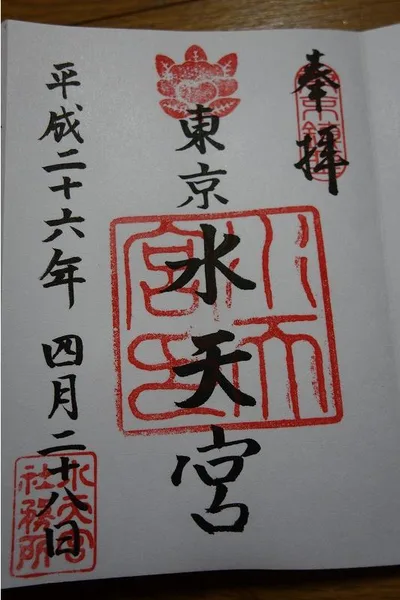
Goshuin photograph, 2014 Suitengu / Hosho Benzaiten / Benzaiten
2-4-1 Nihonbashi Kakigaracho, Chuo-ku, Tokyo
Grounds open 7:00–18:00; the amulet office opens 8:00–18:00 and handles goshuin. A specific goshuin cut-off and writing method are unconfirmed.
To the next stop:250m / walk 4 min · Walking map for this leg
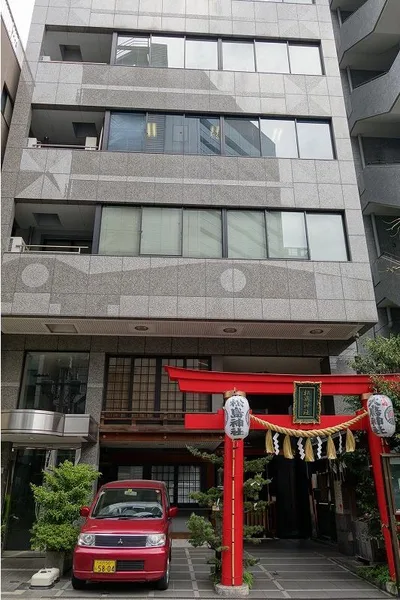
Earlier visit photograph Matsushima Shrine / Daikokushin
2-15-2 Nihonbashi Ningyocho, Chuo-ku, Tokyo
Address verified through the Tokyo shrine association. Goshuin hours, offering and method are unconfirmed. November Days of the Rooster are festival dates.
To the next stop:290m / walk 4 min · Walking map for this leg
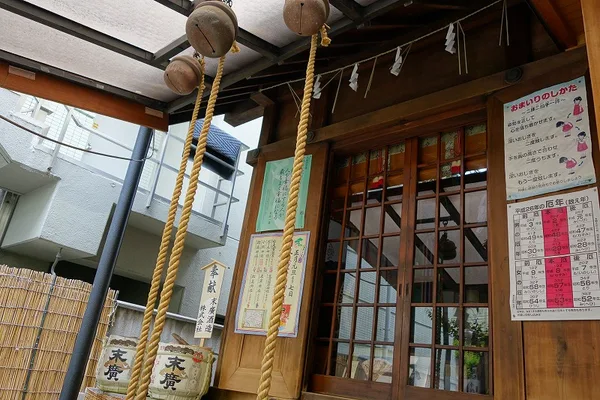
Earlier visit photograph Suehiro Shrine / Bishamonten
2-25-20 Nihonbashi Ningyocho, Chuo-ku, Tokyo
The official calendar lists the New Year pilgrimage on January 1–7, subject to annual changes. Ordinary goshuin hours, offering and method are unconfirmed.
To the next stop:240m / walk 3 min · Walking map for this leg
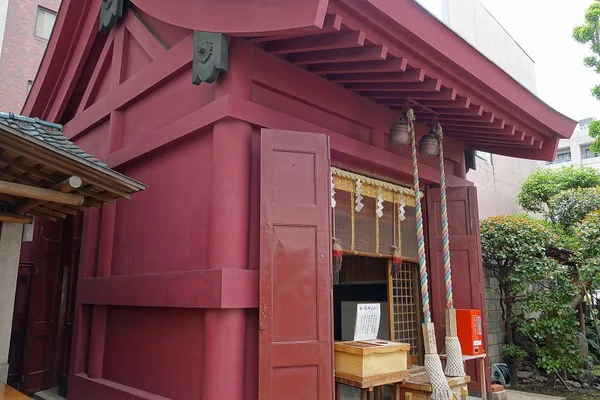
Earlier visit photograph Kasama Inari Tokyo Branch / Jurojin
2-11-6 Nihonbashi Hamacho, Chuo-ku, Tokyo
Ordinary goshuin hours, offering and method are not listed officially. Hamacho Station is an official three-minute walk away. A branch festival is announced for 11:00 on November 15, 2026.
Check before setting out
This route does not guarantee goshuin at all seven shrines. Where ordinary reception conditions are unconfirmed, treat the stop as a worship visit and ask the shrine beforehand about goshuin. Suginomori may be unattended. Around New Year, weekends, Koami auspicious dates, Suitengu Days of the Dog and festivals, allow half a day or split your visits.
Distance, timing and verification
On November 8, 2026, we checked the seven addresses and this order in Google Maps walking directions: 2.0 km and 29 minutes overall. Rounded leg times do not necessarily add up to the overall display. Worship, movement inside grounds, reception queues and breaks are excluded. Entrances, current passage conditions and continuous wheelchair or stroller access are not yet verified. Reviewed field reports will inform dated revisions.
Separate ordinary visits from the New Year pilgrimage
The organizer currently lists seven shrines and specifies no start point or order. This differs from older eight-shrine accounts including Takarada Ebisu. For New Year 2026, completed boards and treasure boats were offered at six shrines excluding Chanoki; visitors did not collect separate board stamps or figurines. Conditions for 2027 have not been verified. Do not apply an older year’s dates or prices to the next New Year.
Questions about the Nihonbashi walk
Can I receive a goshuin at all seven shrines?
This route does not guarantee goshuin at every stop. Ordinary reception hours and methods remain unconfirmed at some shrines. If receiving goshuin is important to your visit, check each shrine’s official guidance for the day.
How long should I allow for all seven shrines?
The mapped walking route is about 2.0 km and 29 minutes. That excludes worship, goshuin queues, movement within the grounds and breaks. Allow 2–3 hours or more as a planning example; at New Year or on busy days, consider half a day or splitting the walk across separate visits.
Which shrine should I start from?
The organizer specifies no starting point or order. This page suggests a model from Suginomori Shrine to Kasama Inari Tokyo Branch. You can reverse it, but adapt the order to each shrine’s reception conditions if you want goshuin.
Are ordinary visits the same as the New Year pilgrimage?
Plan visits to the seven shrines separately from special New Year offerings and reception arrangements. The conditions for distributing shikishi boards and treasure boats at New Year 2026 cannot be assumed for ordinary days or the next New Year. The 2027 arrangements have not been confirmed here.
Sources checked
- Nihonbashi Shichifukujin official website
- Suginomori Shrine
- Koami Shrine
- Chanoki Shrine
- Suitengu / Hosho Benzaiten
- Matsushima Shrine
- Suehiro Shrine
- Kasama Inari Tokyo Branch
Route version: nihonbashi-v1 / 2026-11-08. The complete route has not been checked on site.
Photographs from the original 2014 article
These are earlier visit photographs, including images from the former eight-shrine article. They do not verify the current seven-shrine walking model.
Official information checked November 8, 2026. This is a desk-researched guide; this complete route has not been field-tested. Historical photographs do not establish current reception conditions.